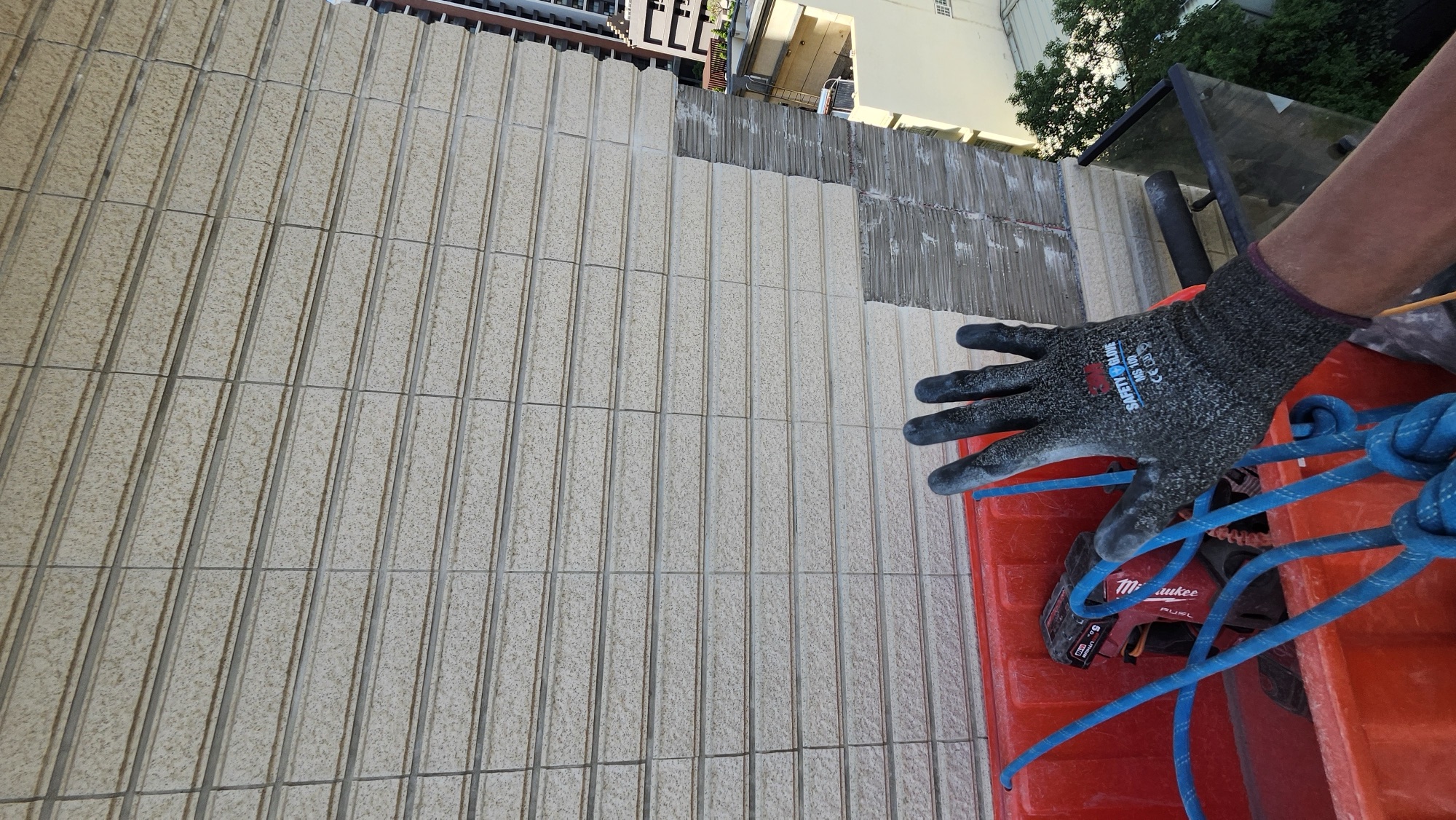
A rope technician's gloved hand checking ribbed facade tiles at the roof edge, with the blue main rope and a power tool alongside
— Service 05 · Facade repair & waterproofing

After the diagnosis, someone still has to go up and fix it.

Our own industrial rope access team — for what a drone cannot reach, and every step that needs a pair of hands.

A drone can see, clean and coat. It cannot knock off a hollow tile or fill a crack. GDS's in-house industrial rope access team takes over from there: the areas a drone cannot reach, close-up verification of what the inspection flagged, and the repair and waterproofing that follows. One report, one point of contact, from finding the problem to finishing the fix.

#facade repair#tile delamination repair#facade waterproofing#crack injection#rope access
Call 02-7733-7678
IRATA
Rope access certification
Twin-rope
Independent backup
Covered
Rope work insured
4
Repair disciplines
— 002 · Division of method

If we don't have to go on the wall, we don't.

These are not two parallel methods but one sequence. Whatever the drone can do, nobody goes on the wall for; where the wall must be touched, IRATA-certified rope technicians work to a written job plan.

Whole-building facade survey
Drone

A full elevation in half a day, including heights nobody can reach, with the crew on the ground throughout.

Large-area cleaning and coating
Drone

No scaffolding, no road closures, minimal disruption to residents and building operations.

Areas a drone cannot reach
Rope technician

Light wells, soffits, the back of louvres — places where flight is constrained and a person has to actually get there.

Close-up verification and hammer tapping
Rope technician

Thermal imaging flags what is suspect; only tapping tells you whether it is truly hollow.

Tile, crack and waterproofing repair
Rope technician

Repair needs contact and force — that is the part a machine cannot do.

The drone sees and treats large areas; the rope team reaches and repairs. The order never reverses: we don't put people on a wall to keep them busy.

— 003 · Three roles

The rope team does three things.

Not "we also do traditional high-access work", but closing the three gaps a drone method leaves: places it cannot reach, judgements that need contact, and repairs that need hands.

01 · Reach

The places a drone cannot get to.

No elevation is one hundred per cent suited to flight. These positions aren't ignored — they're assigned to the other crew.
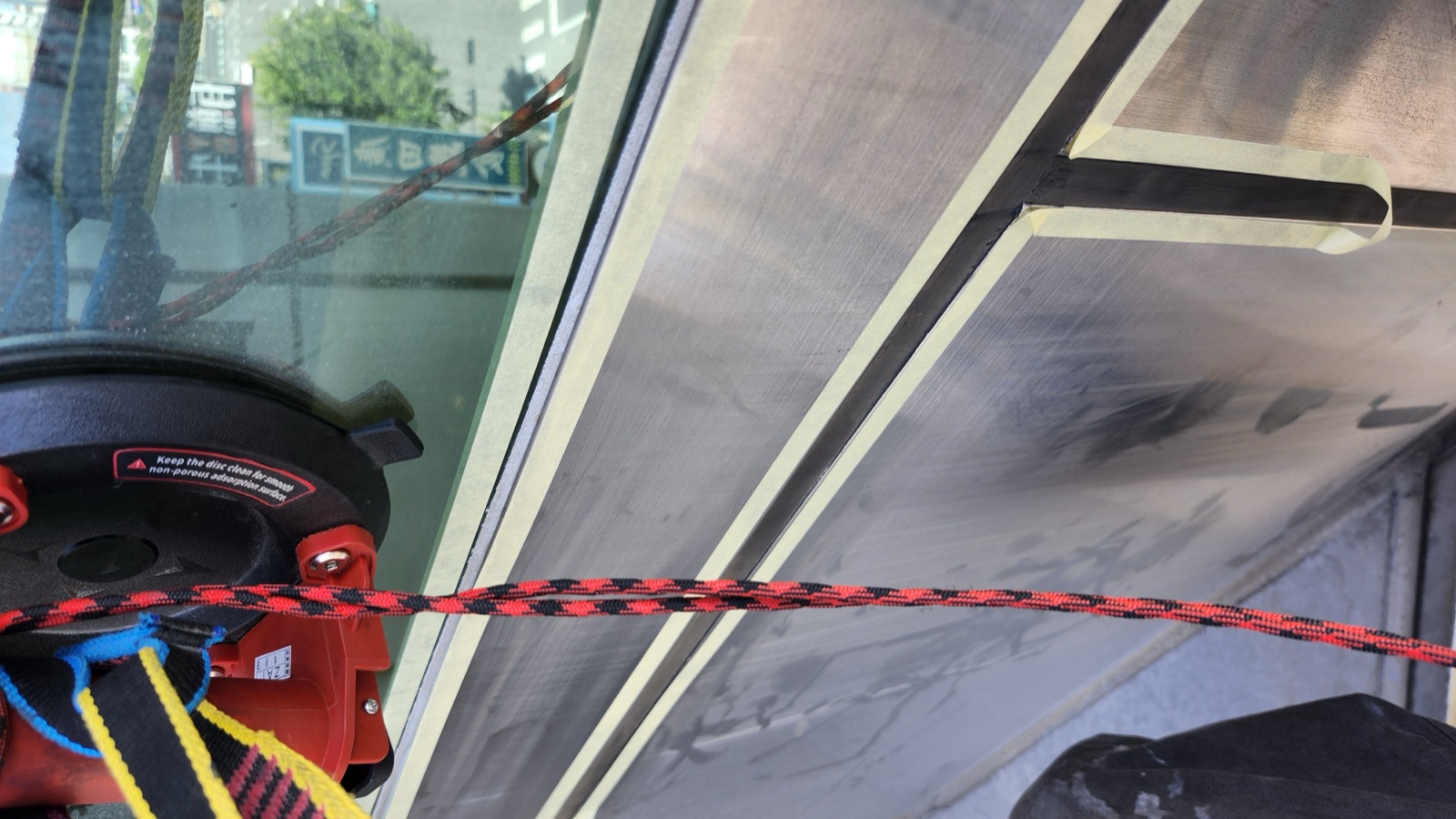
A vacuum suction anchor and red rope set on the edge of a glass canopy, the joints already masked with tape
What makes it hard
  • Light wells and inner courtyards

    Enclosed on four sides, turbulent airflow, obstructed GPS — neither precision nor safety margin is adequate.

  • Soffits and balcony undersides

    Blind to an upward angle: hard to approach and the camera cannot see the underside.

  • Behind louvres and grilles

    The wall behind a screening layer — both imaging and spray are blocked.

  • Parapet interiors and roof structures

    Complex geometry and densely mounted equipment that need handling item by item.

  • Narrow lanes and tight party walls

    Insufficient separation to open a safe flight path.

  • No-fly and restricted sites

    Where the site itself forbids flight, rope access is the only lawful way to work it.

How we work it
  1. 01

    During the site survey, mark drone-coverable areas and rope-only areas together, and write both into the job plan.

  2. 02

    Confirm rooftop anchor positions and load capacity; where they are inadequate, rig a temporary anchor system.

  3. 03

    The drone completes the flyable areas first; the rope crew works only the flagged list, with no duplicated passes.

  4. 04

    Rope-worked areas keep the same before-and-after image record, folded into the same delivered report.
02 · Verification

Thermal says "suspect". Tapping tells you.

AI classification and infrared imaging find the suspect points across the whole building. Deciding whether to repair, and over what area, still takes someone in front of that piece of wall.

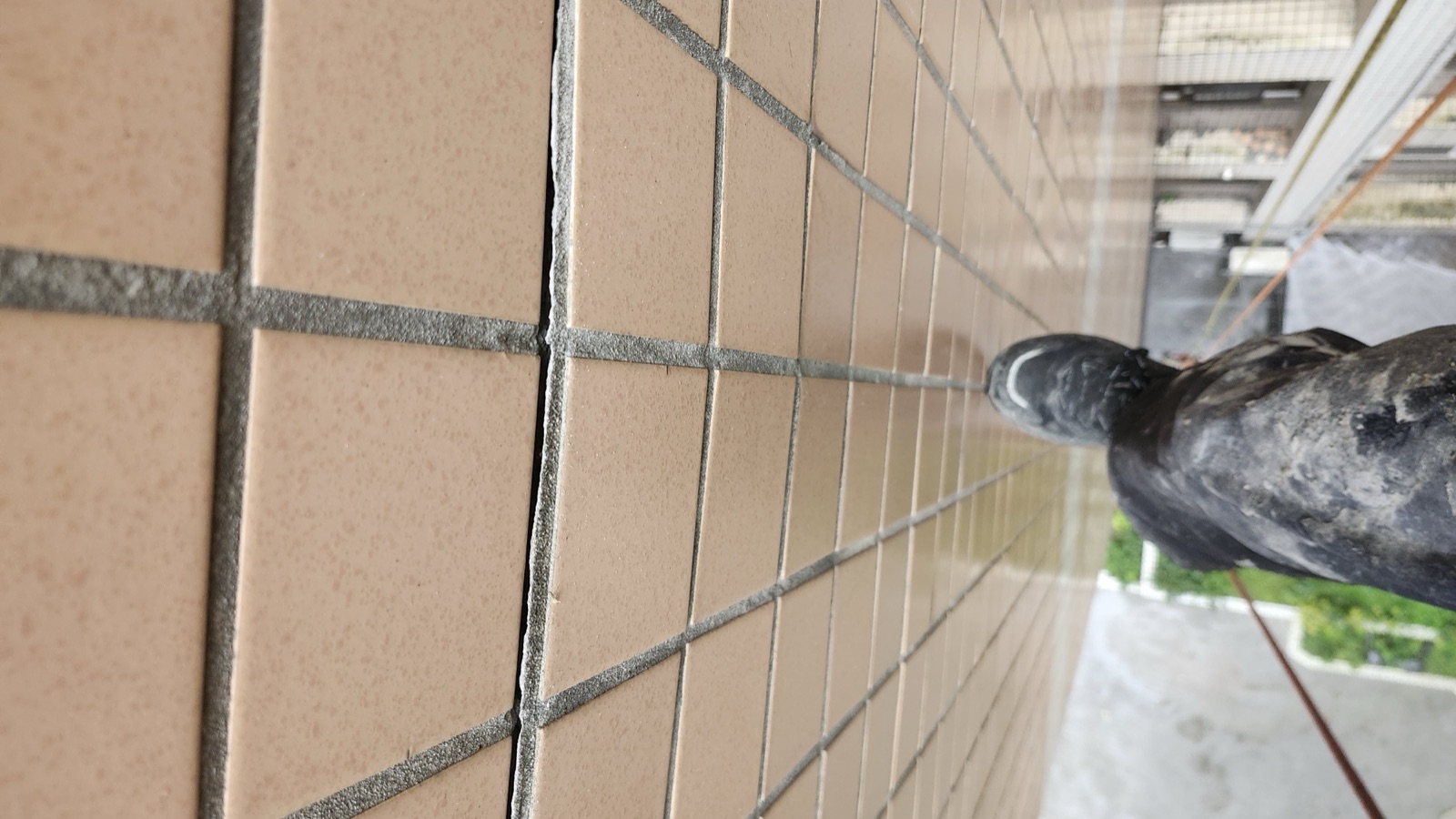
A close-up of a crack running along a facade tile joint, with the rope technician's boot and rope in frame
What makes it hard
  • Thermal screens, it does not adjudicate

    A temperature anomaly can mean an air layer beneath the tile — or simply a material change or residual sun load.

  • Crack width and depth

    Imaging shows where a crack runs; measuring how wide and deep still needs instruments up close.

  • Tile adhesion

    Only the sound of a tap separates bonded, marginally hollow and already detached.

  • Water ingress paths

    Where staining appears on the surface is rarely where the water got in; it has to be traced upward, section by section.

How we work it
  1. 01

    Order the close-up checks by the defect list and coordinates the AI produced.

  2. 02

    Rope technicians descend to each flagged point to tap, measure and photograph at close range.

  3. 03

    Findings go back into the same report, correcting the severity grading the AI assigned.

  4. 04

    The verified result becomes the basis for an architect's or engineer's sign-off and for the repair priority order.

03 · Repair

Repair needs hands on the wall.

Once the health report lists what needs fixing, our own team does the work — no second contractor to appoint, no site conditions to explain twice.

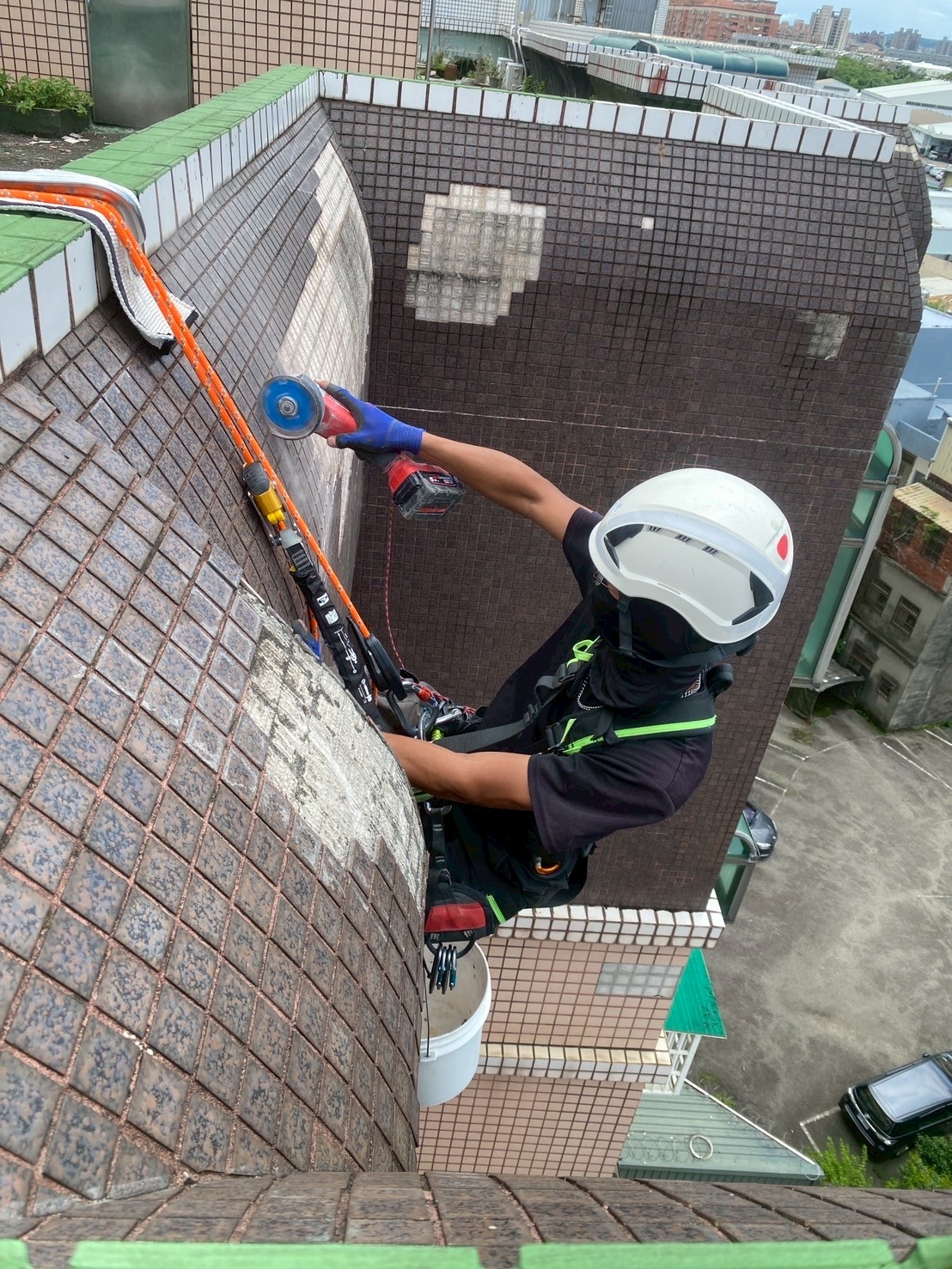
A rope technician suspended on a tiled facade, cutting tiles with a cordless grinder
What makes it hard
  • Hollowing spreads if left

    The boundary keeps migrating with temperature swings and vibration; the longer it waits, the more has to come off.

  • A crack is the way water gets in

    Painting over the surface does not solve it — water still travels the crack into the structure.

  • Colour matching on local repairs

    Discontinued tiles and batch variation both affect how the repair reads afterwards.

  • Joining new waterproofing to old

    The interface is where leaks most often return; the detailing decides the outcome.

How we work it
  1. 01

    Sequence the work by the report's priority order: stop the water first, then the substrate, then appearance.

  2. 02

    Strip hollow tiles, level the substrate and re-lay or locally replace — with tile sourcing and colour match confirmed beforehand.

  3. 03

    Inject cracks with epoxy or foam resin by width; renew sealant at movement joints and window perimeters.

  4. 04

    Confirm the finished waterproofing by ponding or spray test before making good the top coat.

  5. 05

    Before, during and after images are retained and folded into the building's timeline.

— 004 · Scope of work

The four disciplines we self-perform.

These four are carried out directly by the GDS rope access team. Work beyond that scope — structural strengthening, curtain-wall replacement — we flag in the report and help you appoint the right specialist for, rather than taking it on regardless.

Discipline 01

Close-up inspection and hammer tapping

Contact verification of the suspect points a drone survey flagged, settling what imaging alone cannot.

  • ·Point-by-point tapping
  • ·Crack width and depth measurement
  • ·Close-range condition photography
  • ·Findings written back into the health report
Discipline 02

Tile stripping, re-laying and local replacement

Treating confirmed hollow and spalled areas, from removal and substrate levelling through to re-laying.

  • ·Hollow-area removal
  • ·Substrate levelling and priming
  • ·Matched or near-match replacement tiles
  • ·Edge and corner making good
Discipline 03

Crack injection and joint sealing

Closing the way in for water: injection material chosen by crack width, with aged sealant renewed at joints.

  • ·Epoxy resin injection
  • ·Foam resin injection
  • ·Movement joint renewal
  • ·Window perimeter sealing
Discipline 04

Facade waterproofing and top-coat repair

Local or full-elevation waterproofing, leak-tested on completion, then made good for appearance.

  • ·Local and full-elevation systems
  • ·Detailing where new meets old
  • ·Ponding or spray leak test
  • ·Top-coat colour matching
— 005 · Safety system

Going on the wall is a matter of system, not nerve.

The risk in rope access is not whether someone goes on the wall, but what training they hold, what procedure they follow, and what backs them up if something fails. This is what we do on every job.

01

IRATA rope access certification

The team holds Industrial Rope Access Trade Association (IRATA) certification and works descent, positioning, rescue and operating procedures to its standards.

02

Ministry of Labor work-at-height training

Technicians hold the statutory work-at-height training required under Taiwan's occupational safety and health regulations.

03

Twin-rope independent backup

Working line and safety line run to separate anchors, so a failure of either still leaves full support. Nothing depends on a single point.

04

Job plan and risk assessment

Every job begins with a site risk assessment, anchor position and load verification, and a written emergency rescue procedure.

05

Ground exclusion and traffic control

An exclusion zone is set below the work area and managed by a spotter — the same safety standard applied to drone operations.

06

Rope work is covered by our insurance

The company's public liability and employer's liability policies cover rope access work; copies are available for inspection before contract.

07

Full image record

Before, during and after images are retained — both as the basis for acceptance and as part of the building health timeline for year-over-year comparison.

Rope access and facade repair

What owners and building committees most often check before appointing a repair contractor. Certifications, policies and job plans are all available for inspection before contract.

Talk to us
Contact

Contact Us

Want to know what condition your facade is in? Start with an asset assessment

Address
2F, No. 46, Ln. 11, Guangfu N. Rd., Songshan Dist., Taipei City 105, Taiwan
Business Hours
Monday - Friday: 09:00 - 18:00
Saturday: 09:00 - 12:00
Sunday & Public Holidays: Closed
Book an asset assessment

Book an Asset Assessment

Leave your building details and we'll arrange an on-site assessment and walk you through how the health program works

Call 02-7733-7678
or leave your details and we'll call you
LINE Official AccountOnline estimate
On-site assessmentResponse within 24 hoursNo obligation to proceed