The problem is not carelessness. It is the method.
Every serious contractor in facade maintenance runs a safety programme. Toolbox talks, harness checks, anchor inspections, permits to work. None of it changes the underlying fact: a person is suspended several dozen metres above a pavement, and every control in place is a mitigation of that single decision.
The hierarchy of controls that underpins occupational safety practice worldwide is unambiguous about this. Elimination sits at the top; personal protective equipment sits at the bottom. Rope access is an entire discipline built on the bottom of that hierarchy. It is done well by many, and it still cannot get above the ceiling its own method imposes.
That is the frame worth holding as we go through the three risks.
Risk 1 — Occupational injury and personnel safety
Work at height remains one of the most dangerous categories in building maintenance. In Taiwan, the sector records roughly 15 to 25 fatal falls a year. Incident rates for rope access facade work run in the region of 0.02–0.05% per operation — a number that sounds small until it is multiplied across a portfolio and a decade.
What matters for a facilities or risk function is not the average. It is that the severity distribution has no mild tail. A fall from height is rarely a minor injury.
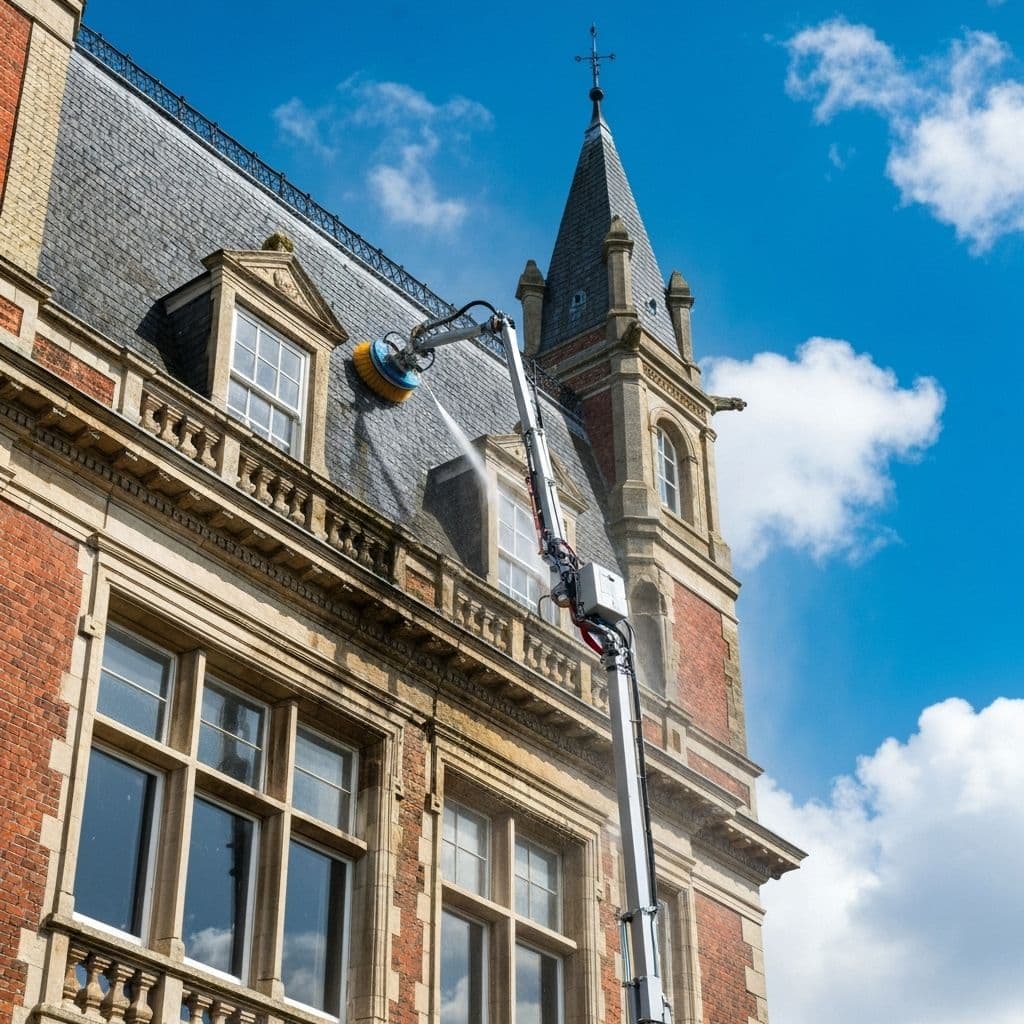
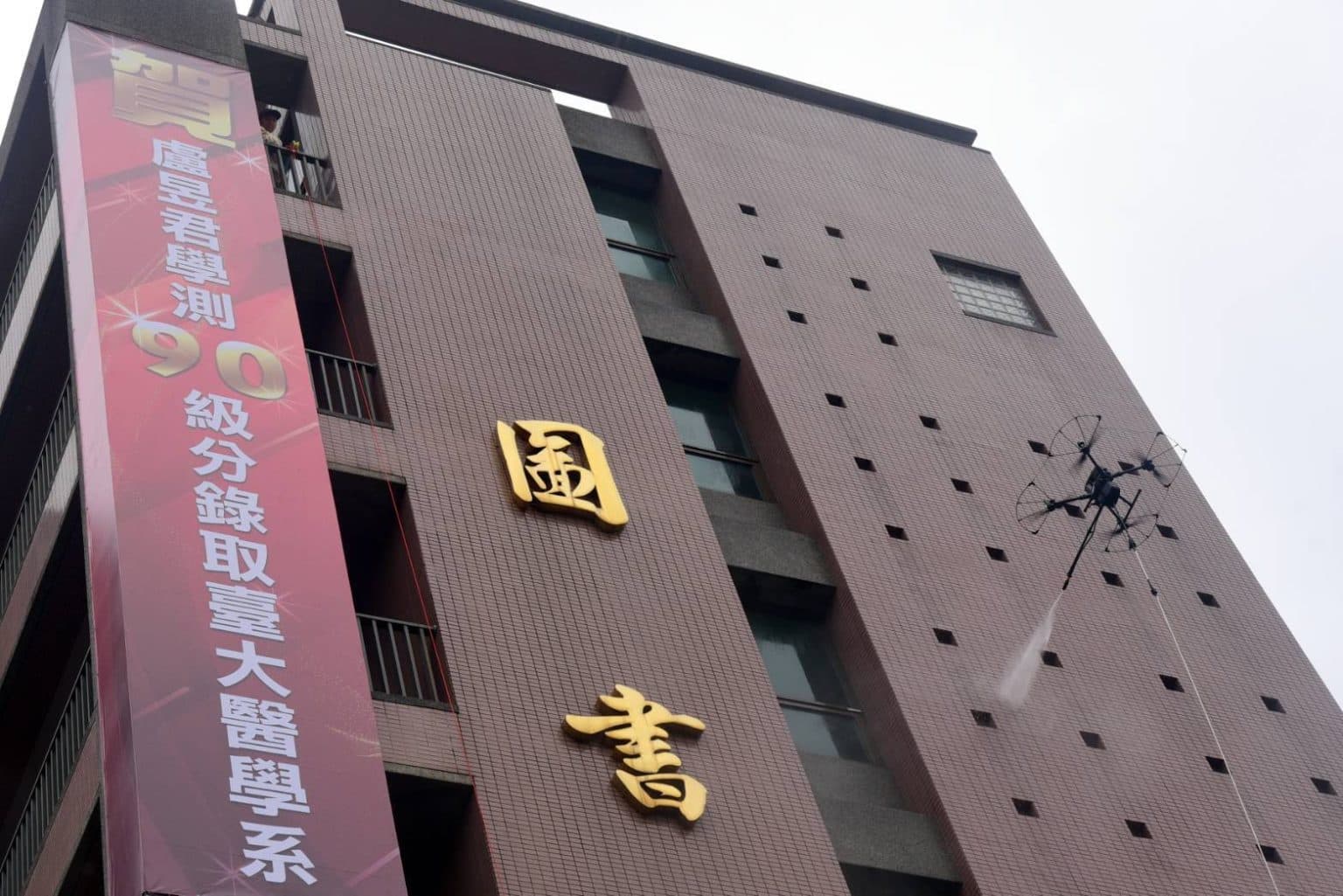
Drone operation changes the shape of the exposure rather than its size: crews work from ground level throughout, so the fall hazard is not reduced, it is absent.
Risk 2 — Legal liability and ESG exposure
Two things tend to surprise principals.
First, engaging a contractor does not fully transfer the duty. Where a principal was aware of a safety risk and did not require it to be addressed, joint liability can follow. An incident on your building attracts labour inspection regardless of who employed the person injured.
Second, the incident record outlives the incident. Occupational injury data feeds ESG disclosure. For a listed company, a fatality in the maintenance supply chain is not merely a contractor's problem — it appears in your social-dimension reporting and in your ratings.
There is a governance dimension too, and it is the one most often missed. Conventional inspection produces a paper report and a signature. Drone operation produces geolocated imagery, thermal data and a complete operations log. When an auditor asks how a maintenance decision was reached, one of those answers is materially stronger than the other.
Risk 3 — Operational interruption
Rope access work needs hoarding, exclusion zones and often road-occupancy permits. For a retail podium or a hotel, the interruption cost frequently exceeds the contract value of the cleaning itself. For a residential community, it produces the complaint load that management committees spend the following month handling.
Drone operation needs neither scaffolding nor road closure, and the working window is measured in days rather than weeks. The building keeps trading.
What this means for a portfolio
If you manage one building, this is a procurement decision. If you manage twenty, it is a policy decision — because the exposure aggregates and the disclosure obligations aggregate with it.
The question we would put to a portfolio owner is not "which contractor is cheapest this cycle". It is: across the next five years, what is the total exposure of continuing to put people on ropes, and what would it take to stop?
That is the conversation the Facade Asset Health Program is designed for.
Where to start
Before a cleaning cycle, it is worth knowing the actual condition of the envelope — which is a different question from what cleaning would cost. A facade survey establishes the baseline, and the maintenance decisions follow from it rather than from a calendar.
If that is useful to you, book an asset assessment or call +886-2-7733-7678.