How often should a building's facade be cleaned? Maintenance intervals and cost planning
In brief: The right intervals — residential communities every 1–2 years, commercial towers quarterly, hotels monthly, industrial buildings every six months. Coastal and industrial-area buildings should shorten those by 30–50%. A term maintenance contract runs 10–20% below one-off pricing, and setting aside 5–10% of the management fee each year builds the budget for it.
"How often should the facade be cleaned?" is among the questions management committees and property managers ask most.
Too often and you are wasting money; too rarely and the facade degrades and the building looks neglected. What makes it harder is that the right interval varies enormously between buildings — some need cleaning once a year, others every month.
What follows sets out practical intervals by building use, environment and maintenance cost, to help a committee build the most economical programme it can.
Optimal intervals by building type
Different uses carry different expectations and different budgets. These are the intervals we recommend from years of service experience:
Residential communities: every 1–2 years
The most common building type in Taipei and New Taipei. Most residential facades are tiled or coated, and in normal conditions cleaning every one to two years maintains a good appearance.
- New buildings (under 5 years old): every 2 years is usually enough
- Mid-age buildings (5–15 years): every 1–2 years
- Older buildings (over 15 years): annually, combined with a facade tile survey
Where a community fronts a busy arterial road, vehicle emissions and dust accelerate soiling considerably, and annual cleaning is advisable.
Commercial towers: quarterly
A commercial building's appearance bears directly on corporate image and rents. Grade A offices generally clean quarterly, Grade B every six months.
Curtain wall buildings need it most frequently, because staining on glass — water marks, dust, droppings — is conspicuous in sunlight and directly affects daylight and outlook from inside.
Hotels: monthly
A hotel's exterior is the first impression a guest forms, which bears on reviews and occupancy. International hotels generally clean monthly, and quarterly at the least.
Entrance lobby glazing and metalwork are treated more often still — some five-star properties wipe those down weekly.
Industrial buildings: every six months
Soiling here comes mainly from process emissions, dust and oily exhaust. Every six months is the baseline, but some sectors need more:
- Food processing: quarterly — oily and organic deposits build fast
- Chemical plants: quarterly — chemical deposits are corrosive
- Electronics: every six months, where cleanroom plants must maintain a clean envelope
Summary of intervals
| Building type | Interval | Cleans per year | Annual budget |
|---|---|---|---|
| Residential community | Every 1–2 years | 0.5–1 | NT$60,000–350,000 |
| Grade A commercial | Quarterly | 4 | NT$400,000–1,500,000 |
| Grade B commercial | Every 6 months | 2 | NT$200,000–750,000 |
| Hotel | Monthly | 12 | NT$600,000–3,000,000 |
| Industrial | Every 6 months | 2 | NT$160,000–800,000 |
| School / public building | Every 1–2 years | 0.5–1 | NT$50,000–300,000 |
Which environmental factors accelerate soiling?
Two buildings in the same use class will soil at very different rates depending on where they sit. The main accelerants:
1. Coastal locations
Buildings along Taiwan's west coast and north coast take sustained salt attack from sea wind. Salt forms white efflorescence on the facade surface and accelerates both corrosion of metalwork and degradation of tiling. Coastal buildings should shorten their interval by 30–50%.
2. Proximity to industry
Buildings near or downwind of an industrial area accumulate dust, oily exhaust and chemical deposits. Beyond the appearance, some of these are acidic or corrosive and damage facade materials over time.
3. High-rainfall, humid regions
Taipei and Keelung see over 2,000mm of rain a year, and that humidity is ideal for moss and algae. The rain itself leaves water marking and mud streaking on the facade.
4. Busy traffic corridors
Buildings near arterial roads, motorway ramps or bus stops rapidly accumulate carbon particulates and exhaust residue, forming grey-black staining.
5. Heavy bird roosting
Some buildings, through their form or their surroundings — a park, a riverside — become roosting sites for pigeons and other birds. Droppings are strongly corrosive, difficult to remove, and stain permanently if left.
Adjusting the interval for environment
| Factor | Acceleration | Adjustment |
|---|---|---|
| Coastal (within 3km of the sea) | Severe | Shorten 40–50% |
| Near industry | Severe | Shorten 30–50% |
| High rainfall (over 2,000mm/yr) | Moderate | Shorten 20–30% |
| Busy traffic corridor | Moderate | Shorten 20–30% |
| Bird roosting | Severe locally | Additional localised cleaning |
| Adjacent construction (temporary) | Severe | Full clean once works complete |
Five clear signs a facade needs cleaning
Beyond the scheduled interval, any of these five is reason to bring the work forward:
One: the facade visibly darker or uneven in colour
The most direct indicator. If the facade has darkened by several tones, or shows patches of varying depth — sheltered areas lighter, exposed areas darker — dust and soiling have accumulated substantially.
How to check: view the whole building from a distance, or compare against photographs from completion.
Two: green moss or black mould spotting
Green patches mean moss or algae are establishing; black spotting is likely mould. Beyond the appearance, biological growth damages the material structure — and it spreads, so it should be dealt with promptly.
Three: soiling accumulating in tile joints
Tile joints are where soiling collects first. Once the joints have gone from white or light grey to dark or black, cleaning is due.
Four: curtain wall glazing hazing or heavily water-marked
If glazing viewed from inside is covered in water marks, dust or haze, it affects both appearance and daylight. A committee can pick this up through the property manager collecting occupier feedback.
Five: pronounced water marking or mud streaking after rain
If rain leaves obvious water marks or dark mud streaks on the facade, substantial dust has accumulated on the surface — the rain is simply washing it down into irregular dark streaks.
Budgeting for the year
Setting a realistic annual maintenance budget is an important part of a committee's financial management.
Residential communities
Per household per year: roughly NT$800–2,000
For a 200-unit, 15-storey community:
- Facade area: approximately 4,500 m²
- Cost per clean: NT$200,000–280,000 (drone cleaning)
- Interval: every 1.5 years
- Annualised: NT$133,000–187,000
- Per household per year: NT$665–935
It is worth setting aside 5–10% of the management fee each year as a facade maintenance reserve, accumulating over time.
Commercial towers
Per ping per year: roughly NT$150–400
The higher frequency — quarterly — makes the annual budget correspondingly larger. But for a commercial building, maintaining appearance is a necessary investment in staying competitive on rent.
Points to watch when budgeting
- Hold 10–15% contingency — for unforeseen work such as an emergency clean after a typhoon
- Budget cleaning and survey together — some buildings must file statutory public safety inspections under Article 77 of the Building Act, and the facade survey cost can be planned alongside
- Allow for inflation — materials and labour rise around 2–3% a year
- Set the cost allocation explicitly — confirm how costs are apportioned at the owners' meeting
Term contract versus one-off pricing
Committees regularly face this decision: sign a term maintenance contract, or price each clean separately?
Term maintenance contract (2–3 years)
| Advantage | Detail |
|---|---|
| Price | 10–20% below one-off quotations |
| Scheduling | Priority allocation of working slots |
| Consistency | The same team, familiar with the building |
| Additional services | Annual facade survey and emergency localised cleaning included |
| Payment | Instalments, annual or half-yearly |
One-off pricing
| Advantage | Detail |
|---|---|
| Flexibility | No contractual commitment |
| Comparison | Contractors can be re-compared each time |
| No long-term commitment | Suits buildings unsure of their interval |
The numbers compared
For a residential building with 4,500 m² of facade cleaned every 1.5 years:
| Option | 3-year total | Cost per clean | Saved over 3 years |
|---|---|---|---|
| One-off pricing (2 cleans) | NT$500,000 | NT$250,000 | — |
| 2-year contract (2 cleans) | NT$425,000 | NT$212,500 | NT$75,000 |
| 3-year contract (2 cleans) | NT$400,000 | NT$200,000 | NT$100,000 |
Our term maintenance contracts also include:
- An annual infrared facade survey — using a DJI Matrice 30T thermal camera to catch delamination and water ingress early
- Emergency localised cleaning — localised soiling after a typhoon or other event, handled at no additional cost
- A maintenance report — a facade condition assessment and recommendations after every clean
Building the maintenance schedule
A good annual schedule accounts for:
The best seasons to clean
- Spring (March–April) — after Lunar New Year and before the plum rains, a good window
- Autumn (October–November) — after typhoon season, with settled weather
- Avoid the plum rain season (May–June) — continuous rain disrupts the work
- Avoid typhoon season (July–September) — unstable weather, and a typhoon may undo the clean
An example schedule
| Month | Activity |
|---|---|
| January | Review the annual maintenance plan, confirm the budget |
| March | Spring facade clean |
| May | Facade survey (drone infrared) |
| June | Localised cleaning after the plum rains, if needed |
| September | Autumn facade clean, after typhoon season |
| October | Typhoon damage assessment and repair |
| November | Facade survey, ahead of public safety filing |
| December | Annual maintenance report, next year's plan |
Scheduled facade maintenance with General Drone Service
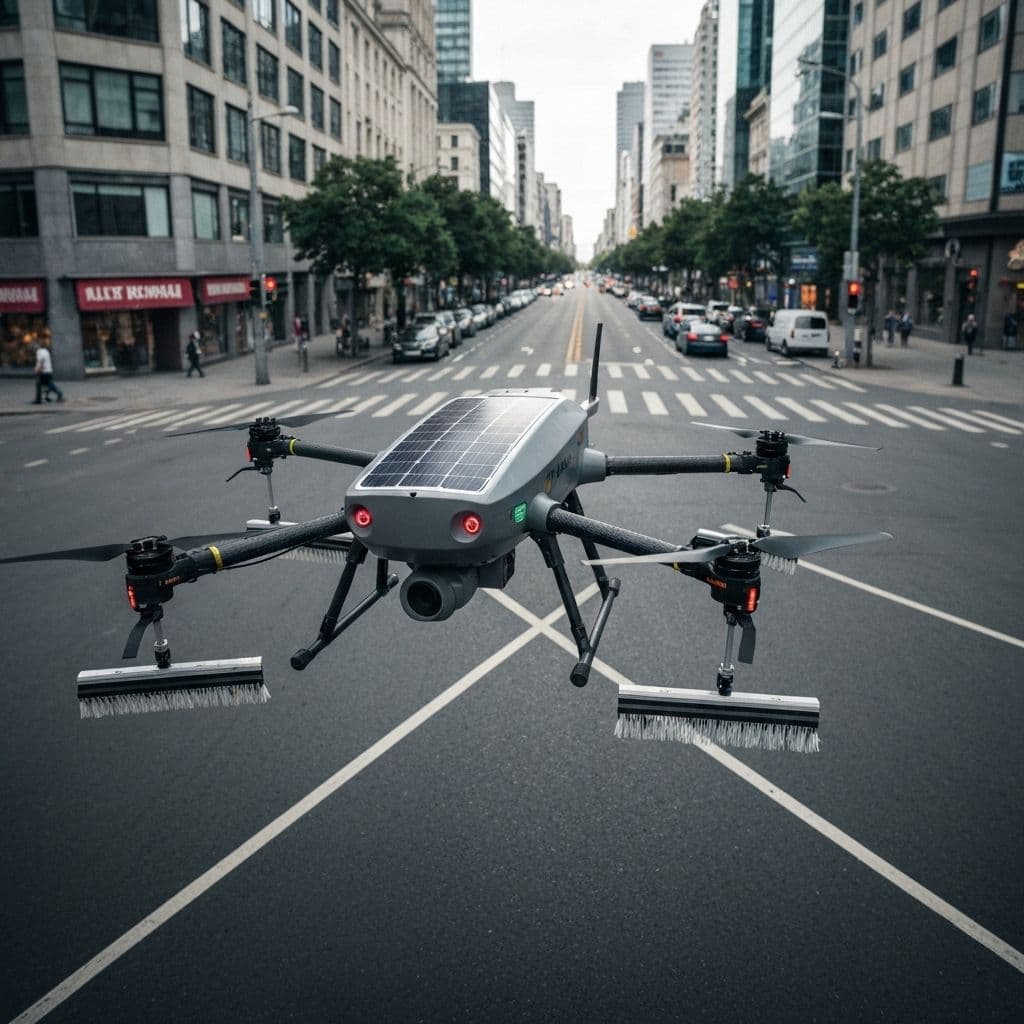
We provide scheduled facade maintenance for residential and commercial buildings in Taipei, New Taipei and across Taiwan, tailored to each building. Our aircraft — a DJI M350 RTK carrying the cleaning system, alongside a DJI Matrice 30T infrared thermal camera for survey work — let us deliver cleaning and inspection as a single integrated service.
Whether you are planning facade cleaning for the first time or moving from traditional methods to drone work, we can put together an approach that fits.
Get in touch for a maintenance proposal built around your building.
- Cost: how cost is assessed
- Service: facade cleaning
- Enquiries: contact us