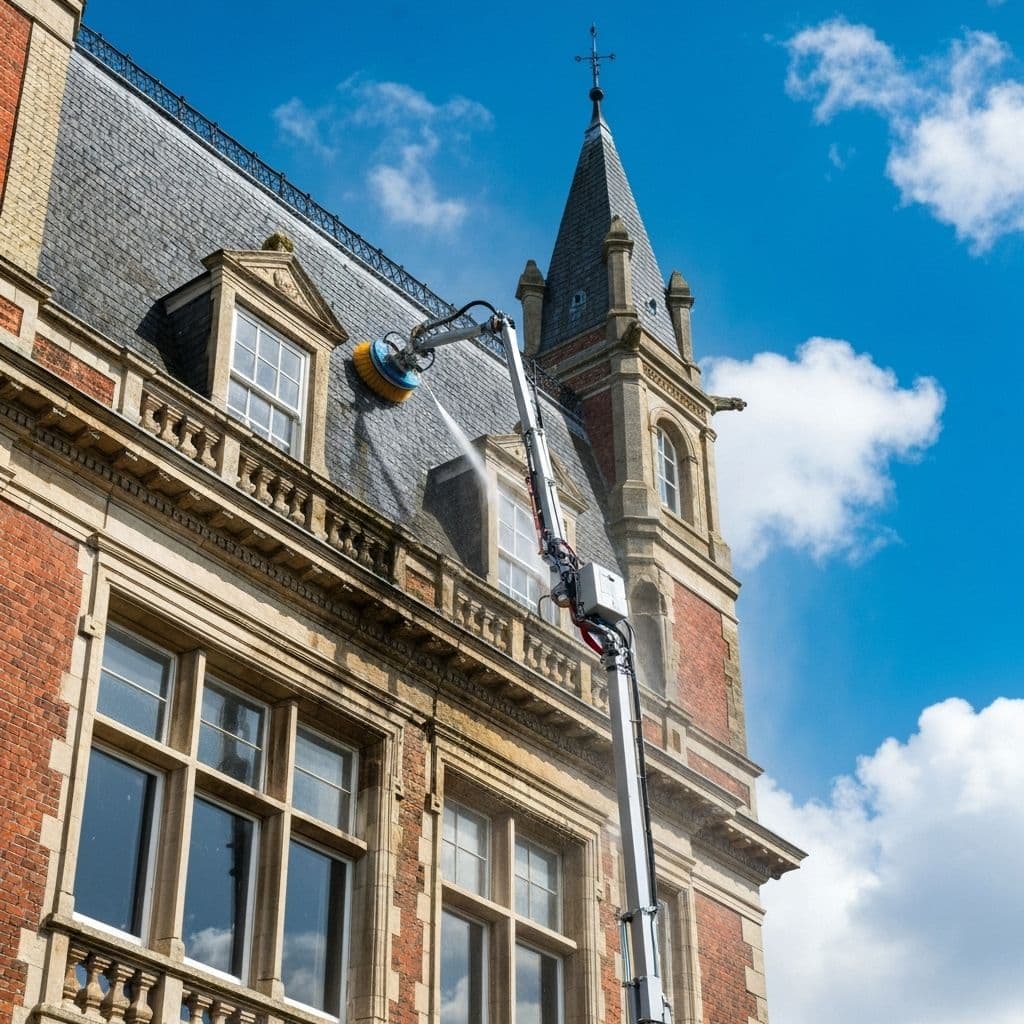
Facade cleaning for a residential building: a management committee's guide from proposal to sign-off
In brief: Facade cleaning is significant maintenance work, and it runs through a full process — an owners' meeting resolution, budgeting, contractor selection, managing the work and signing it off. This is a complete guide for management committees, aimed at getting it done compliantly and efficiently.
A residential building's facade is its face. Over time, air pollution, rain erosion and moss growth all leave it ageing and dirty — which does more than look bad. It can damage the waterproofing layer, leading to water ingress and tiles coming loose.
For many management committees, though, getting facade cleaning moving is not straightforward. Aligning residents, setting a budget, selecting a contractor and managing the work all need careful handling. What follows is a practical process, based on experience.
1. Initial assessment: does the facade actually need cleaning?
Before proposing anything, the committee should assess the facade's current condition to establish whether cleaning is needed and how urgent it is.
Common signs it does
- Visible discolouration — the facade going black or green
- Black mould spotting in the tile joints
- Water marks, oily film or other staining on curtain wall glazing that will not weather off
- Moss, algae or other biological growth on the facade
- More than 3–5 years since the last clean
A professional condition assessment
It is worth commissioning a professional assessment. We offer drone aerial survey, which captures high-resolution imagery of every elevation quickly and safely, establishing the extent and severity of soiling precisely — useful supporting evidence for the proposal.
2. The owners' meeting: securing agreement
The legal position
Under Article 10 of the Condominium Administration Act, repair, management and maintenance of common property fall to the manager or the management committee. Where the cleaning cost is high enough to constitute significant expenditure from the common fund, a resolution of the owners' meeting is advisable.
What the proposal should contain
A complete facade cleaning proposal includes:
- A facade condition report — with photographs or aerial imagery, setting out the extent of soiling
- The case for cleaning — from appearance, safety and waterproofing protection
- Budget estimate — indicative quotations from two or three contractors, compared
- Method — the differences between scaffolding, cradle work and drone cleaning
- Programme — how long the work takes and what it means for residents
The threshold for a resolution
Facade cleaning is maintenance and management of common property, and is handled per the community's own articles. Most communities require expenditure above a stated sum to be approved by a majority of those attending the owners' meeting. Confirm the relevant provisions in your own articles before proceeding.
3. Budgeting
How cost is calculated
Facade cleaning is normally priced on facade area in square metres, with the main variables being:
- Building height — taller means harder, and dearer
- Facade material — curtain wall glazing, tile, stone and metal panel each need different treatment
- How heavily soiled — light and heavy soiling require different processes
- Method — scaffolding, cradle work and drone cleaning have very different cost structures
An indicative budget
For a 15-storey residential block with roughly 3,000 square metres of facade across four elevations:
- Scaffolded cleaning: around NT$300,000–600,000 (including access)
- Cradle cleaning: around NT$250,000–450,000
- Drone cleaning: around NT$150,000–350,000 (no access cost, a substantial saving)
Drone cleaning removes the access cost and shortens the programme considerably, keeping disruption to residents to a minimum. For detail on how cost is assessed, see our pricing guide.
4. Selecting a contractor
What to weigh
When comparing contractors, a committee should consider:
- Credentials — the required licences and insurance
- Experience — previous work, particularly on comparable buildings
- Method — whether the contractor uses current technology such as drone cleaning, and how safe it is
- Cleaning agents — whether they are environmentally sound and safe for the building materials
- Warranty and aftercare — the warranty period and what happens after handover
- Site safety — protective measures on site and the insurance carried
A workable selection process
- Invite quotations from three or more contractors, openly or by invitation
- Have each attend site and submit a method statement
- Compare the proposals at committee — price, quality and safety together
- Sign a formal contract with the selected contractor
For a sense of our own experience on residential buildings, see our completed projects.
5. The contract
What it should state
A sound facade cleaning contract covers:
- Scope — which levels and what area are being cleaned, stated clearly
- Method and sequence — the cleaning process, the equipment and the agents used
- Programme — start date, duration, completion date
- Payment terms — usually 30% on signature, 40% during the works, 30% on acceptance
- Quality standard — explicit acceptance criteria and how defects are handled
- Safety responsibility — where site safety liability sits, and the insurance required
- Warranty — period and scope
- Breach — late completion penalties and the remedy for work not meeting standard
6. Managing the work
Before it starts
- Publish the programme and what residents need to do 7–14 days in advance
- Confirm the protective measures around the working area
- Photograph the facade's condition before work begins
- Confirm the weather is suitable
While it runs
- Check progress and quality daily
- Record the work on camera for the file
- Deal with residents' questions and suggestions
- Check that the safety measures are actually being applied
Where drone cleaning makes management easier
With drone cleaning, the committee's job gets considerably lighter. There is no scaffold or suspended equipment to manage, residents have no privacy concerns about workers outside their windows, and noise is much lower. Our teams provide a live video feed during the work, so the committee can follow progress at any point. More on facade cleaning services.
7. Acceptance standards
What to check
- Cleanliness — elevation by elevation and level by level, how much soiling was removed; 90% or better is the normal expectation
- Material condition — that tile, glazing and metalwork have not been damaged in the process
- Drainage — that drainage runs clear with no detergent residue
- Surroundings — the working area cleared, with nothing left behind
Documents at handover
- Before-and-after photographs, every elevation and every level
- Safety data sheets (SDS) for the cleaning agents used
- Site diary and quality records
- The warranty certificate
8. Maintenance afterwards
Once the clean is complete, the committee should set up a maintenance schedule:
- Annually — a visual or drone survey of the facade, to catch problems early
- Every 3–5 years — a full facade clean
- As it arises — deal with localised heavy soiling or damage promptly, before it spreads
We offer scheduled survey and maintenance arrangements for residential buildings, to help committees maintain appearance and safety efficiently. Get in touch to discuss it.
Closing
Facade cleaning looks like straightforward maintenance, but every step from proposal to sign-off needs planning and follow-through from the committee. Choosing the right contractor and a safe, efficient method does more than smarten the building up — it extends its life and improves the quality of living in it.
General Drone Service has extensive experience of residential facade cleaning, from initial assessment through delivery to ongoing maintenance, offered to management committees as a single professional service. If your community is planning facade cleaning, see our service options or browse our completed projects.