The safety of drone facade cleaning: five things you need to know
In brief: Drone facade cleaning removes the person from height, which is where nearly all the risk in traditional facade work sits. We use professional equipment, have completed more than 50,000㎡ with no major safety incident, and carry NT$10 million public liability and NT$5 million employer's liability insurance.
"Is drone facade cleaning actually safe?" is the question clients ask first. As a newer method, it deserves the scrutiny. What follows examines it from several angles.
One: it is safer than the traditional method
Why traditional cleaning carries so much risk
The traditional approaches are:
Suspended cradle
- The operative works from a cradle at height
- Dependent on mechanical equipment and ropes
- Equipment failure can lead to a fall
- Significant scope for human error
Boom lift
- Requires a skilled operator
- Restricted sightlines
- Mechanical failure risk
- Complex to set up
Rope access
- Depends almost entirely on individual technique
- Heavily affected by weather
- Physically demanding
- Fatigue accumulates over long periods at height
The statistics:
- Taiwan sees roughly 10–15 work-at-height accidents a year
- Facade cleaning accounts for around 30% of them
- The main causes: equipment failure, human error, sudden weather change
What drone cleaning changes
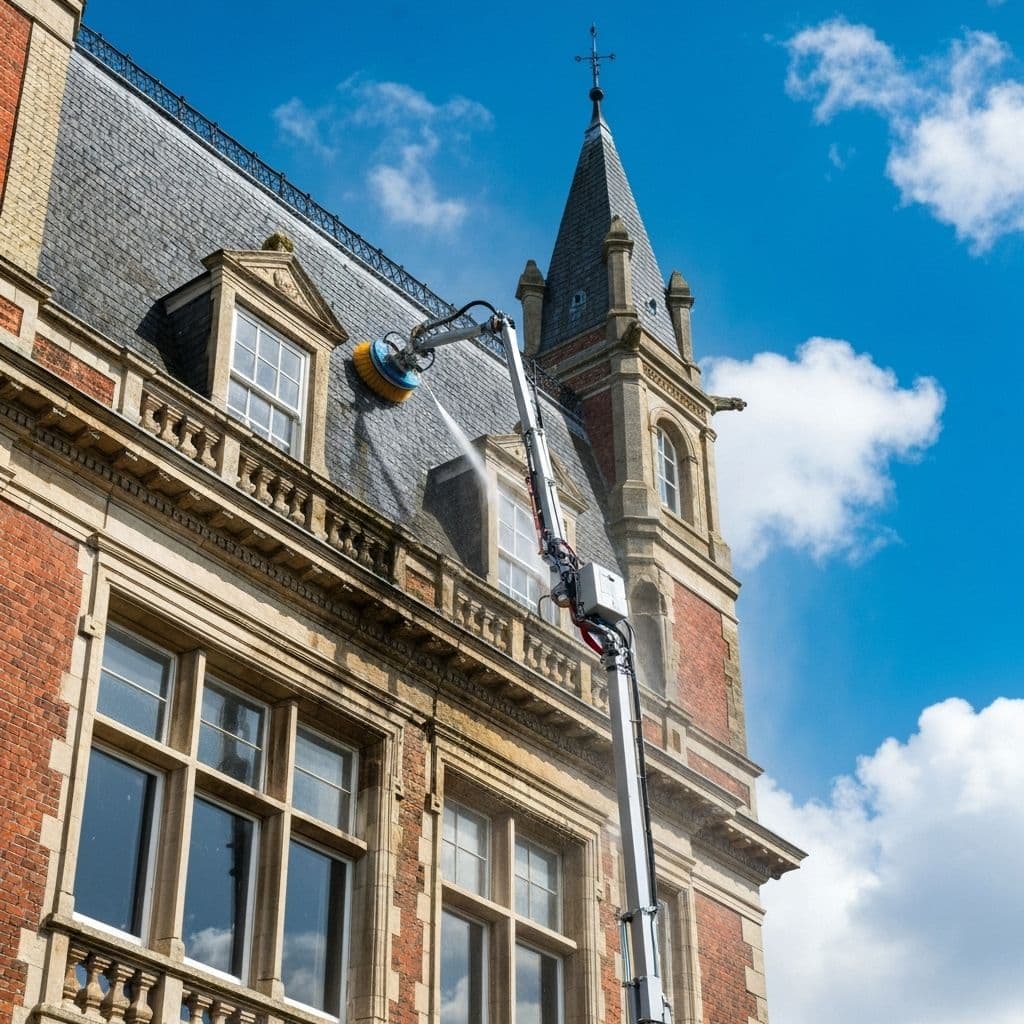
Nobody works at height
- ✅ Every operator works from the ground
- ✅ Nobody climbs or is suspended
- ✅ The fall exposure disappears
- ✅ Occupational incident risk falls accordingly
Redundant safety systems
Modern cleaning aircraft carry:
- GNSS positioning — precise position control
- Obstacle sensors — automatic avoidance
- Wind speed monitoring — automatic return above the safe threshold
- Redundant systems — dual battery and dual communications
- Loss-of-link protection — automatic return to the launch point
A professional flight team
- CAA-licensed operators
- Regular technical training
- Strict standard operating procedures
- Live monitoring and defined response capability
Two: equipment and licensing
Our aircraft are professional-grade equipment operated under Civil Aeronautics Administration authorisation, maintained on a defined schedule so that they are always in serviceable condition.
Maintenance
Daily, before work
- ✅ Propeller inspection
- ✅ Battery condition check
- ✅ Sensor calibration
- ✅ Communications test
- ✅ Cleaning system check
Weekly
- Deep clean
- Wear inspection on components
- Software updates
- Spares prepared
Monthly
- Full strip-down inspection
- Consumables replaced
- Independent testing
- Detailed records filed
Licensing and compliance
Civil Aeronautics Administration
- ✅ Commercial operating authorisation
- ✅ Operator licences
- ✅ Flight plans approved
- ✅ Compliance with civil aviation regulation
Equipment
- CE safety marking
- FCC communications certification
- Manufacturer warranty and support
Three: operating procedure
We work to strict standard operating procedures under a two-operator rule, with a detailed safety assessment and site survey before the work, live monitoring of flight and weather during it, and a review and record afterwards.
Before the work
1. Site survey
- Structural analysis of the building
- Assessment of the surroundings
- Flight path planning
- Hazard identification and risk assessment
2. Weather
Conditions for working:
- ✅ Visibility over 1km
- ✅ Wind under Beaufort force 5 (10 m/s)
- ✅ No rain, no lightning
- ✅ Temperature 5–40°C
Conditions that stop work:
- ❌ Rain, or rain imminent
- ❌ Strong or gusting wind
- ❌ Thunderstorm warning
- ❌ Poor visibility
3. Safety exclusion zone
- A 30-metre radius exclusion zone established
- Warning signage placed
- Ground crew posted
- The area kept clear of anyone not involved
During the work
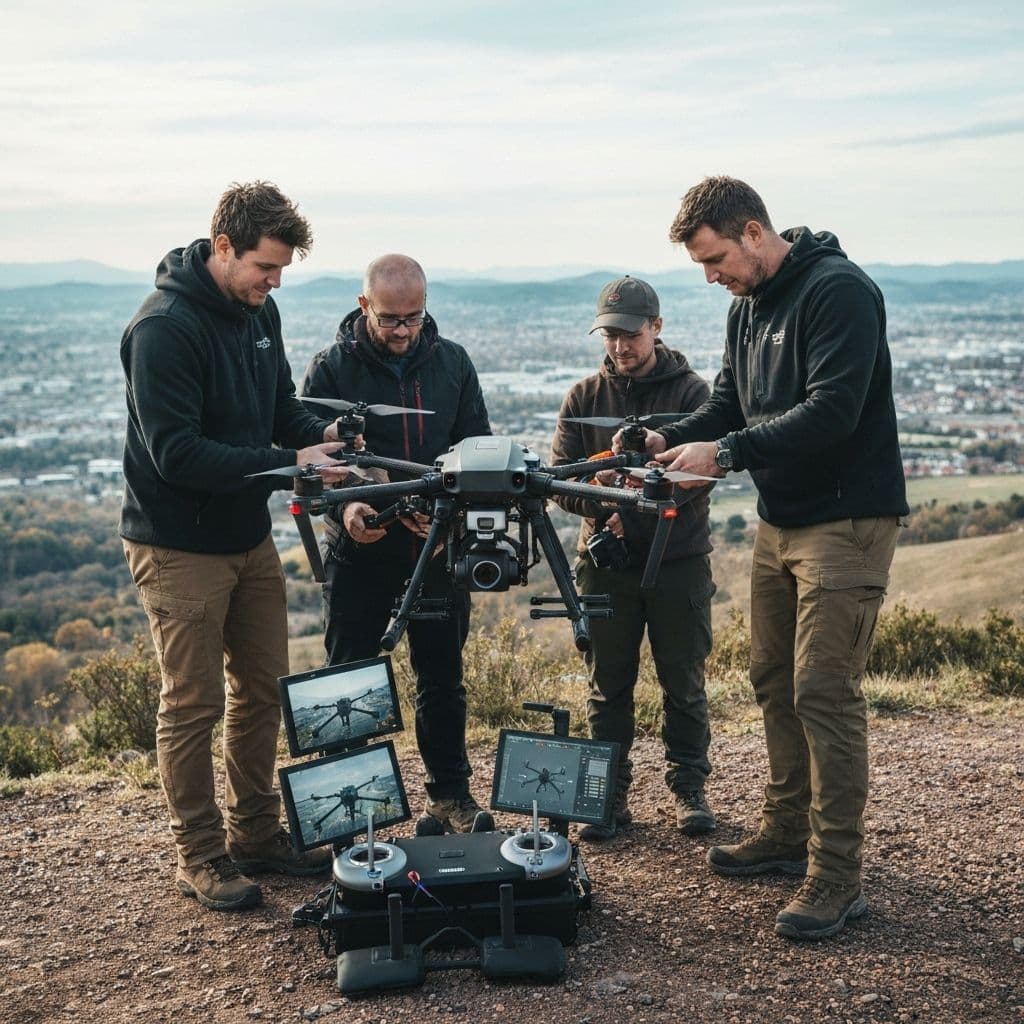
The two-operator rule
- Pilot in command — flies the aircraft and controls the cleaning
- Observer — monitors the surroundings and the aircraft's state
Live monitoring
- Flight altitude and position
- Battery state
- Wind and weather
- Equipment temperature
- Cleaning result
Contingency
- A reserve aircraft on standby
- Emergency landing points pre-planned
- Backup communications
- First aid equipment on site
Standard operating procedure
-
Pre-work briefing (15 minutes)
- Confirm the plan
- Assign responsibilities
- Check equipment state
- Confirm communications
-
Delivery
- Fly the planned route
- Maintain communications
- Monitor weather continuously
- Record the operation
-
Post-work review (10 minutes)
- Check equipment state
- Confirm the cleaning result
- Record any anomalies
- Compile the operational report
Four: insurance and liability
The cover we carry
1. Liability insurance
- Public liability: NT$10 million
- Employer's liability: NT$5 million
- Covering:
- Third-party injury
- Property damage
- Business interruption
- Clean-up costs
2. Equipment insurance
- Airframe cover
- Cleaning equipment cover
- Comprehensive
3. Staff insurance
- Employer's liability
- Group accident cover
- Labour insurance
- Occupational accident insurance
Risk management
Prevention
- Complete risk assessment
- Detailed method statement
- Thorough training
- Scheduled equipment maintenance
Control during the work
- Live monitoring
- Double safety checks
- Contingency plans ready to execute
- Complete records retained
Follow-up
- Client satisfaction review
- Quality review
- Continuing improvement
- Case experience accumulated
The safety record
- ✅ More than 50,000㎡ of completed work
- ✅ No major safety incident
- ✅ No client property loss
- ✅ No injuries
Five: client feedback
What clients say
Asset management, a listed company: "We assessed several cleaning contractors. General Drone Service had the most complete safety management by some distance. Since moving to drones we have stopped worrying about a workplace accident."
Chair, a residential management committee: "Seeing the operator complete the whole job from the ground put residents at ease. It is efficient and quiet — far better than the traditional method."
Deputy general manager, a construction company: "We hold strict safety requirements. Their licensing, insurance and standard operating procedures are all complete. They are a partner we can rely on."
Frequently asked questions
Q1: Could the aircraft simply fall?
A: Modern aircraft carry multiple redundant safety systems:
- ✅ Dual battery backup — automatic switchover on primary battery failure
- ✅ Automatic return-to-home — on loss of communications link
- ✅ Emergency landing — a controlled landing on fault detection
- ✅ Multi-constellation GNSS — precise positioning, no drift
- ✅ Safety exclusion zone — the area below the working zone kept clear throughout
More fundamentally: the dominant risk in traditional facade cleaning is a person falling from height. With drone cleaning that risk does not exist, because nobody is up there.
Q2: How are drones used for facade cleaning, and could it damage the building?
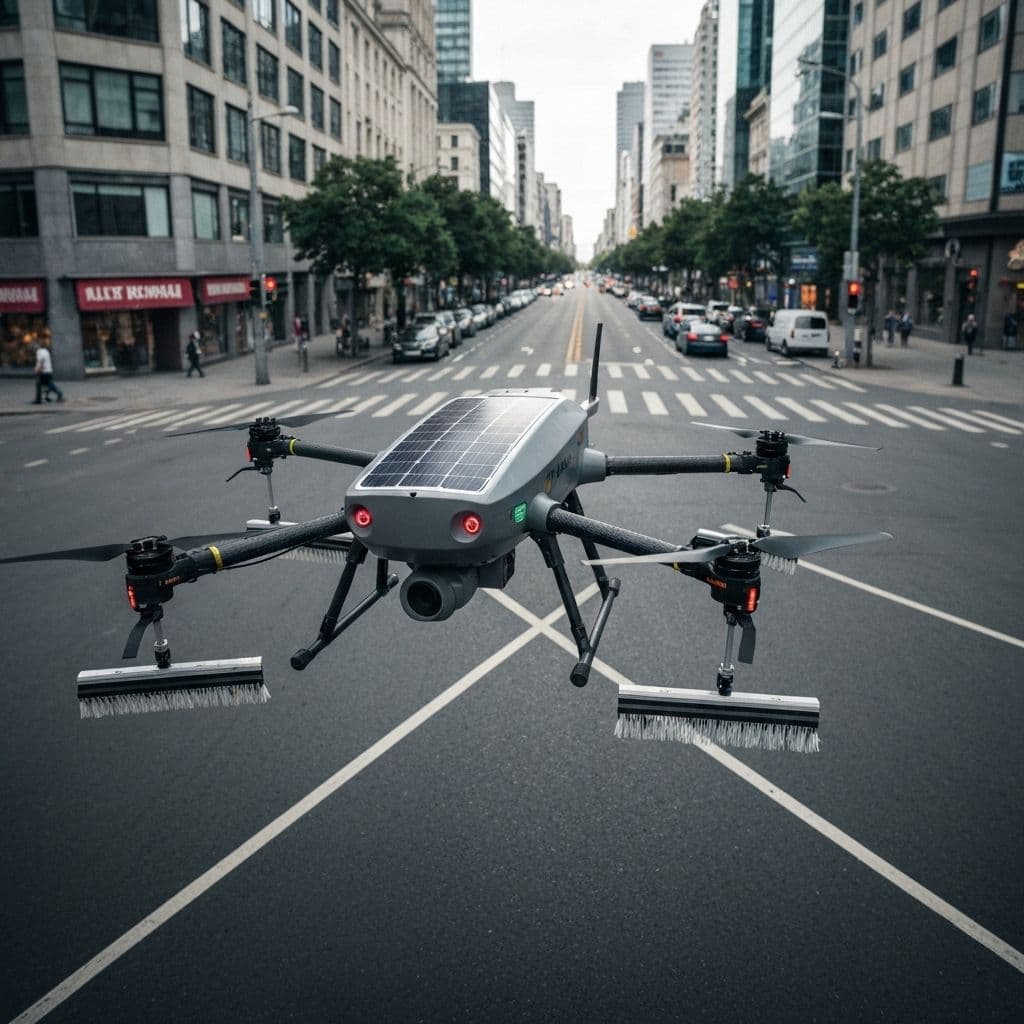
A: No. Professional cleaning equipment is carried on a multirotor airframe and applied through precise flight control and a spray system, with several protective measures:
- ✅ Pressure set to the material — glass, tile, stone and metal each get a different pressure
- ✅ Appropriate cleaning agents — biodegradable formulations that do not harm the facade
- ✅ Working distance maintained — avoiding direct impact
- ✅ A test area first — a small area cleaned to confirm the result before the full elevation
We complete a 3D model and route plan before the work, so every obstruction is accounted for. Across more than 50,000㎡ of completed work we have had no incident of facade damage and no client claim. More detail: drone facade cleaning.
Q3: What happens in strong wind or rain?
A: We hold strict weather criteria:
- ✅ Wind monitoring — live wind speed measurement on site; work stops immediately above Beaufort force 5 (10 m/s)
- ✅ Forecasting — the forecast checked before work, with settled weather chosen
- ✅ Aircraft capability — our aircraft handle force 6 (12 m/s), but for safety we stop at force 5
- ✅ Flexible scheduling — poor weather means rescheduling at no cost to the client
Working criteria:
- ✅ Visibility over 1km
- ✅ Wind under Beaufort force 5 (10 m/s)
- ✅ No rain, no lightning
- ✅ Temperature 5–40°C
Q4: Could it damage the facade, glazing or coatings?
A: No. The cleaning strategy is worked out in detail:
- ✅ Pressure set to the material
- ✅ Appropriate cleaning agents that do not harm the facade
- ✅ Working distance maintained
- ✅ Property damage cover included in our liability insurance
- ✅ A test area first to confirm no damage occurs
Q5: Who is liable if something goes wrong? Is the insurance adequate?
A: We carry:
- ✅ NT$10 million public liability — third-party injury, property damage, business interruption
- ✅ NT$5 million employer's liability
- ✅ Comprehensive equipment cover — including loss of the aircraft itself
- ✅ Staff insurance — employer's liability, group accident cover
What the liability cover extends to:
- Third-party injury
- Property damage — buildings, vehicles
- Business interruption
- Clean-up costs
- Legal costs
Q6: How much safer is drone cleaning than rope access?
A: The comparison:
| Rope access | Drone cleaning | |
|---|---|---|
| Personnel at height | ✅ Required | ❌ Not required |
| Fall exposure | The dominant risk | Does not arise |
| Weather exposure | Med-high | Low — schedule can flex |
| Equipment failure risk | Medium — cradle, ropes | Low — redundant systems |
| Human error risk | High — fatigue, misjudgement | Low — automation plus monitoring |
The conclusion: the difference is structural rather than incremental. Removing the person from height removes the category of accident that dominates the statistics.
Q7: Are the operators licensed?
A: Yes:
- ✅ CAA licensed — every operator holds a Civil Aeronautics Administration drone operating licence
- ✅ At least 100 hours of flight experience, having passed our internal assessment and current on medical checks
- ✅ Regular technical training — monthly, so skills stay current
- ✅ Strict standard operating procedures every operator must know thoroughly
- ✅ Two-operator rule — pilot in command plus observer
- ✅ Continuing development — regular professional courses to keep up with the technology
Q8: What happens if something goes wrong mid-operation?
A: We have a defined response:
- ✅ Live monitoring — aircraft state, battery, wind speed monitored continuously
- ✅ Reserve aircraft — on standby during the work, ready to substitute
- ✅ Emergency landing points — several planned in advance
- ✅ Backup communications — automatic switchover if the primary link fails
- ✅ First aid equipment on site
The sequence: detect the anomaly → stop work immediately → initiate return or landing → inspect the equipment → assess whether to continue.
Q9: What is the safety record?
A:
- ✅ More than 50,000㎡ of completed work with no major safety incident
- ✅ No aircraft loss in service
- ✅ No client property loss — no facade damage, no broken glazing
- ✅ No injuries to operators or third parties
Q10: How is safety monitored during the work?
A: On several levels at once:
- ✅ Two-operator rule — one flying, one watching the environment
- ✅ Live telemetry — altitude, position, battery, wind speed, equipment temperature
- ✅ Video recorded throughout — so any anomaly can be reviewed
- ✅ Continuous communications between operator, observer and ground crew
- ✅ Regular checks on equipment state during the work
- ✅ Risk assessment before, during and after
Why General Drone Service
Safety comes first
1. Licensing
- ✅ Civil Aeronautics Administration commercial operating authorisation
- ✅ Operator licences held
- ✅ Occupational safety and health compliance
2. Equipment
- ✅ Redundant safety systems
- ✅ Scheduled maintenance
- ✅ Adequate reserve equipment
3. Insurance
- ✅ NT$10 million public liability
- ✅ NT$5 million employer's liability
- ✅ Comprehensive equipment cover
- ✅ Complete staff insurance
4. Management
- ✅ Complete standard operating procedures
- ✅ A risk assessment framework
- ✅ A culture of continuing improvement
- ✅ No major safety incident to date
Closing: safety is the point of the method
Drone facade cleaning is not simply safe — it is safer than the traditional alternative, through:
- The equipment: professional aircraft with redundant safety systems
- The team: CAA-licensed operators under regular training
- The procedures: complete standard operating procedures and a two-operator rule
- The insurance: NT$10 million public liability and NT$5 million employer's liability
- The experience: over 50,000㎡ completed with no major safety incident
Worth reconsidering
No personnel at height, redundant safety systems, and full insurance cover — those three together are what make drone facade cleaning the right choice for enterprises and property managers.
🚀 Arrange a safety assessment
Want to see our safety measures for yourself?
What we provide
- A site safety assessment — establishing what approach fits
- An equipment demonstration — see the operation for yourself
- A full safety report — the measures explained in detail
- Professional consultation — every question answered
📞 Phone: +886-2-7733-7678 📧 Email: contact@drone168.com 🏢 Coverage: Taiwan-wide service · Taipei office only
General Drone Service Co., Ltd. — safety first
Last updated: 7 November 2025