The ranges
For 2026 in Taiwan, a whole-building clean typically falls in these bands:
| Building type | Typical range |
|---|---|
| Residential community, 10–20 storeys | NT$120,000 – NT$350,000 |
| Commercial office | NT$150,000 – NT$750,000 |
Wide bands, and deliberately so — the spread is real, not evasive. Four things drive it.
What moves the number
Height. Equipment requirement rises non-linearly with storey count. The gap between a building under 10 storeys and one over 30 can reach 50% on unit rate alone.
Facade area. Unit price falls as area rises. Below roughly 500 m², a minimum charge of NT$3,000–5,000 typically applies, because mobilisation costs the same whatever the size.
Cladding material. Glass curtain wall, stone, tile and metal panel each need a different agent and a different pressure. Mixed-material elevations cost more because the plan has to change across the facade.
Soiling level. General dust and water staining is the base case. Established moss, rust staining, grease or graffiti can add 30–50%.
Per square metre, by access method
This is the comparison worth having in front of you when quotes arrive:
| Method | Per m² | Notes |
|---|---|---|
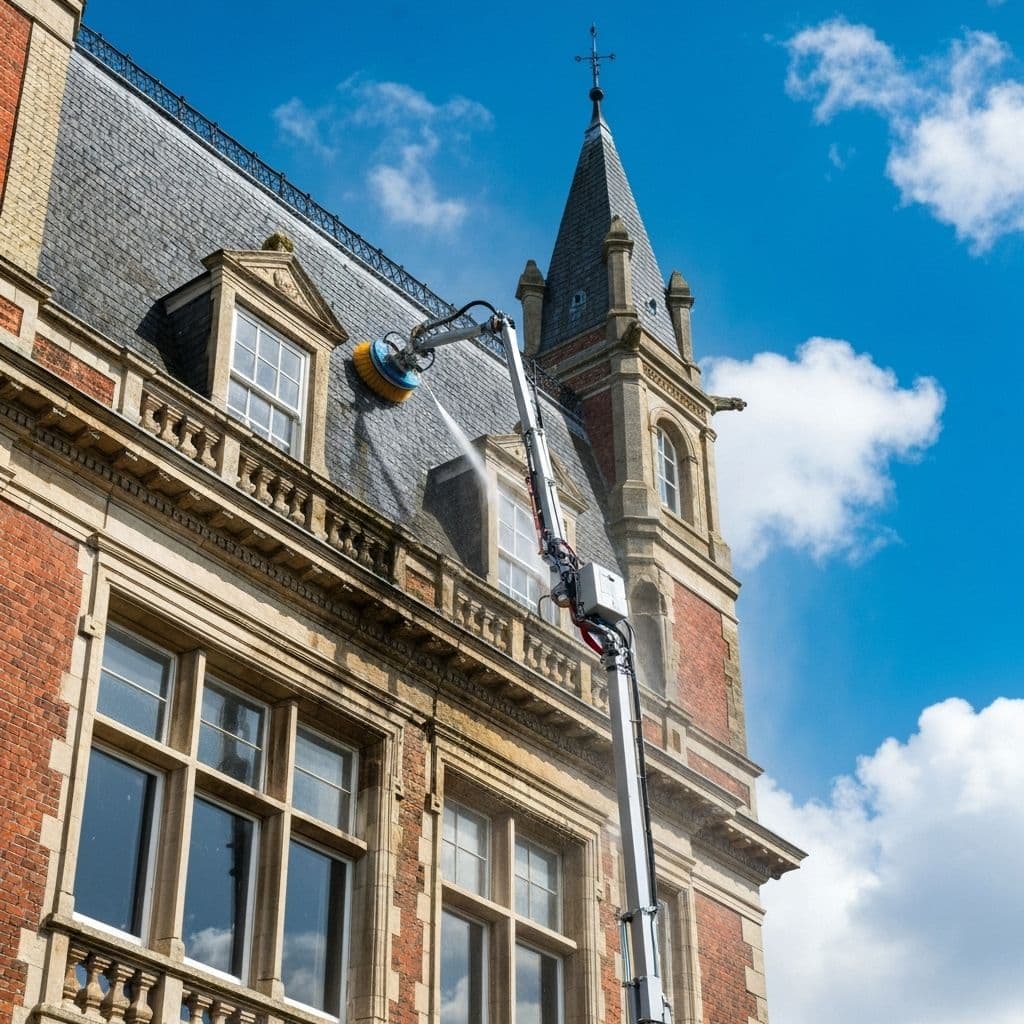
| Cradle / gantry, manual | NT$80 – 150 | Needs roof anchor points |
| Scaffolded | NT$120 – 200 | Includes erection and dismantling |
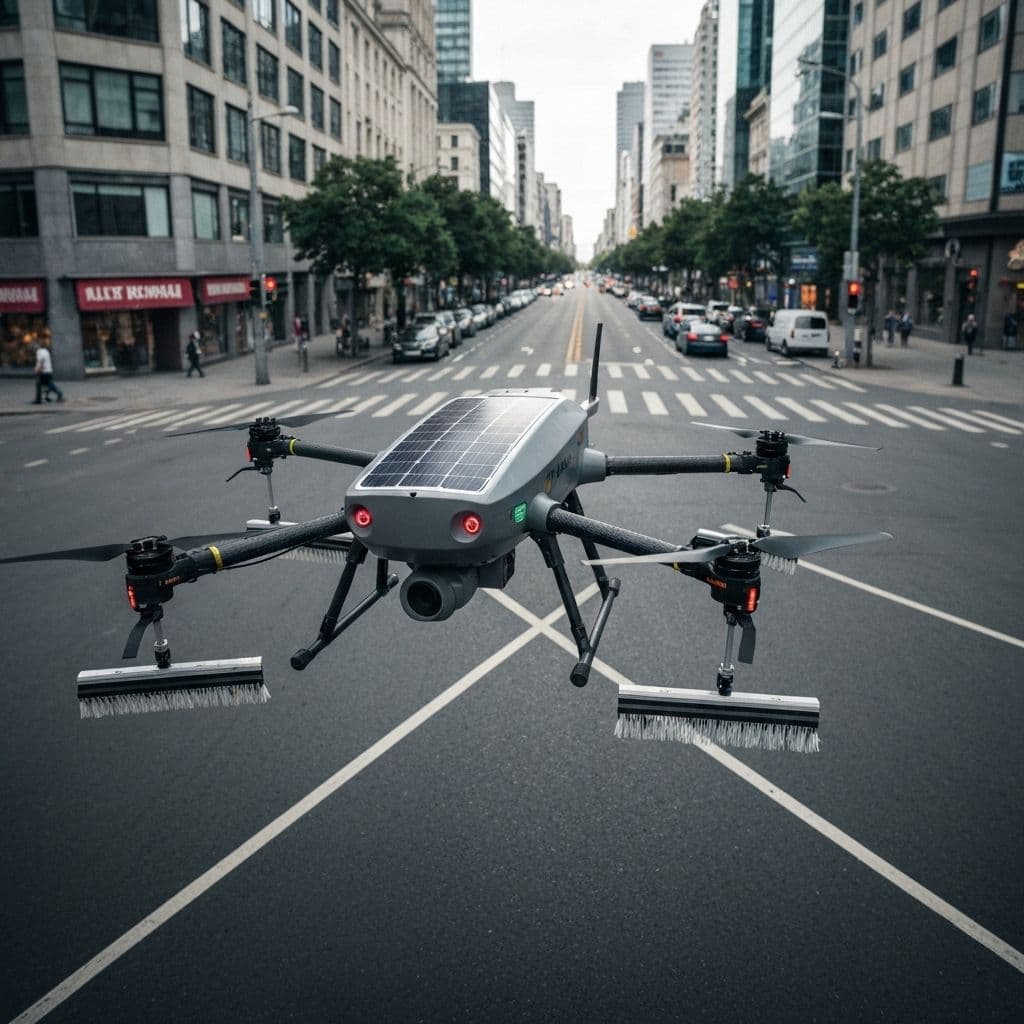
| Drone | NT$60 – 120 | No scaffolding, no road-occupancy permit |
Drone cleaning typically comes in 15–30% below the conventional methods — and that comparison understates the gap, because it counts only the quoted line. The conventional figures do not include road-occupancy permits (NT$3,000–8,000), additional work-at-height insurance (NT$5,000–15,000), or the revenue lost while a podium or entrance is hoarded off.
Scaffolding is worth one specific caveat: if the facade needs substantial repair anyway, scaffolding that is going up regardless makes cleaning from it nearly free at the margin. Where cleaning is the only requirement, it is the most expensive option in the table.
How to fund it
The failure mode is predictable. Facade cleaning is remembered every five to eight years, arrives as one large number, and gets voted down at the owners' meeting — after which it is remembered again in another two years, larger.
Two structural fixes:
Fund it as a recurring line. Set aside roughly 5–10% of the management fee into a facade maintenance fund. When the work falls due, it is already funded, and the meeting is approving a schedule rather than an assessment.
Contract multi-year. Two- to three-year agreements typically price 10–20% better than one-off engagements, and — more importantly — they make the cycle actually happen. A facade cleaned on schedule needs less aggressive treatment each time, which compounds in your favour.
The sequencing point
One thing worth saying plainly, because it affects what you should be budgeting for.
Cleaning restores appearance. It tells you nothing about whether tiles are debonding behind the surface, whether joints have failed, or whether water is getting in somewhere. On a building past about 20 years old, that is usually the more consequential question — and it is the one that turns into a safety issue rather than a cosmetic one.
The order that makes sense is: survey first, then clean what the survey says warrants cleaning, then repair what it flagged. A committee that does it in that order is budgeting from evidence. A committee that cleans on a calendar is budgeting from habit.
We keep diagnosis and treatment separate for that reason — a diagnostic finding is not a commitment to sell work, and we do not recommend cleaning in order to sell cleaning.
Getting a comparable number
Whichever provider you use, get four things in writing before comparing quotes: the facade area the price was calculated from, what proportion of the facade will be treated, what is included beyond the cleaning itself, and what happens if the result is incomplete on inspection.
Full method-by-method rates are in the facade cleaning cost guide. To establish what your building actually needs first, book an asset assessment or call +886-2-7733-7678.