Choosing a facade cleaning contractor in Taipei: five criteria and two worked case studies
In brief: Taipei's dense urban environment and humid climate mean facade cleaning is in constant demand. Below: five criteria for choosing a contractor, two real drone cleaning projects in Xinyi and Songshan, and why drone cleaning has become the direction of travel for building maintenance in the city.
Taipei is Taiwan's densest concentration of tall buildings, from the commercial towers of Xinyi District to the residential blocks of Songshan. Facade cleaning is routine maintenance for every one of them. But Taipei's particular conditions — narrow streets, heavy traffic, strict construction controls — make the work harder here than in most cities.
When a management committee chooses a contractor, cost is not the only question. Whether the method actually suits Taipei's urban conditions matters just as much. What follows starts from those conditions and works toward the right answer for a given building.
1. What is different about facade cleaning in Taipei
Climate and environment
Taipei sits in a basin in northern Taiwan, with several climate characteristics that affect facades directly:
- High humidity — annual mean relative humidity above 75%, which encourages moss and mould
- Acid rain — urban air pollution makes rainfall mildly acidic, accelerating material degradation
- The northeast monsoon — wet winters leave facades damp for extended periods
- PM2.5 and vehicle emissions — buildings on main arterial roads accumulate deposits noticeably faster
Urban constraints
Taipei's density creates challenges that are specific to the city:
- Narrow lanes — many older neighbourhoods have lanes too narrow for a crane
- Strict traffic control — highway occupation applications in the city centre are involved, costly and need planning well ahead
- Arcades and unauthorised structures — obstructing access at the lower levels
- Tight gaps between buildings — leaving little room for traditional access equipment
Regulatory and administrative requirements
Facade cleaning in Taipei involves:
- A highway occupation licence for crane use, usually needing 7–14 days' notice
- An application under Taipei's construction management rules for scaffolding
- Traffic management and safety hoarding during the works
- Restrictions on working hours in some areas — residential districts limit night work
2. Five criteria for choosing a contractor
One: safety credentials and proper licensing
The most basic criterion, and the most important. Confirm the contractor holds:
- Proper corporate registration covering the relevant business scope
- Safety certification for work at height
- Drone operating authorisation, if drone cleaning is proposed
- Occupational safety training records for the crew
Two: adequate insurance
Facade cleaning is high-risk work and the insurance position cannot be taken lightly:
- Public liability — covering damage to third parties during the works
- Labour and occupational accident insurance — covering the crew
- Property damage cover — for damage to the building caused during the works
Ask for current policy documents and check the sums insured are adequate.
Three: real experience in Taipei
Taipei's conditions are specific, and an experienced contractor will know:
- The application process and timescales in each district
- What matters on different building types — commercial, residential, industrial office
- How to treat the facade materials common in Taipei
- How to work with a management committee
Four: equipment and technical capability
Assess whether the contractor's equipment fits the job:
- Traditional methods: crane capacity, cradle safety specification, rope quality
- Drone: airframe specification, cleaning module performance, the flight team's experience
- Cleaning agents: whether they are environmentally sound and appropriate to the facade material
Five: transparent pricing
A professional quotation should itemise:
- The unit rate per ping, or how the total is calculated
- Whether cleaning agents and water are included
- Whether the highway occupation fee is separate
- Any surcharges for height or material
- Invoicing and warranty terms
3. Case study: a commercial tower in Xinyi District
Background
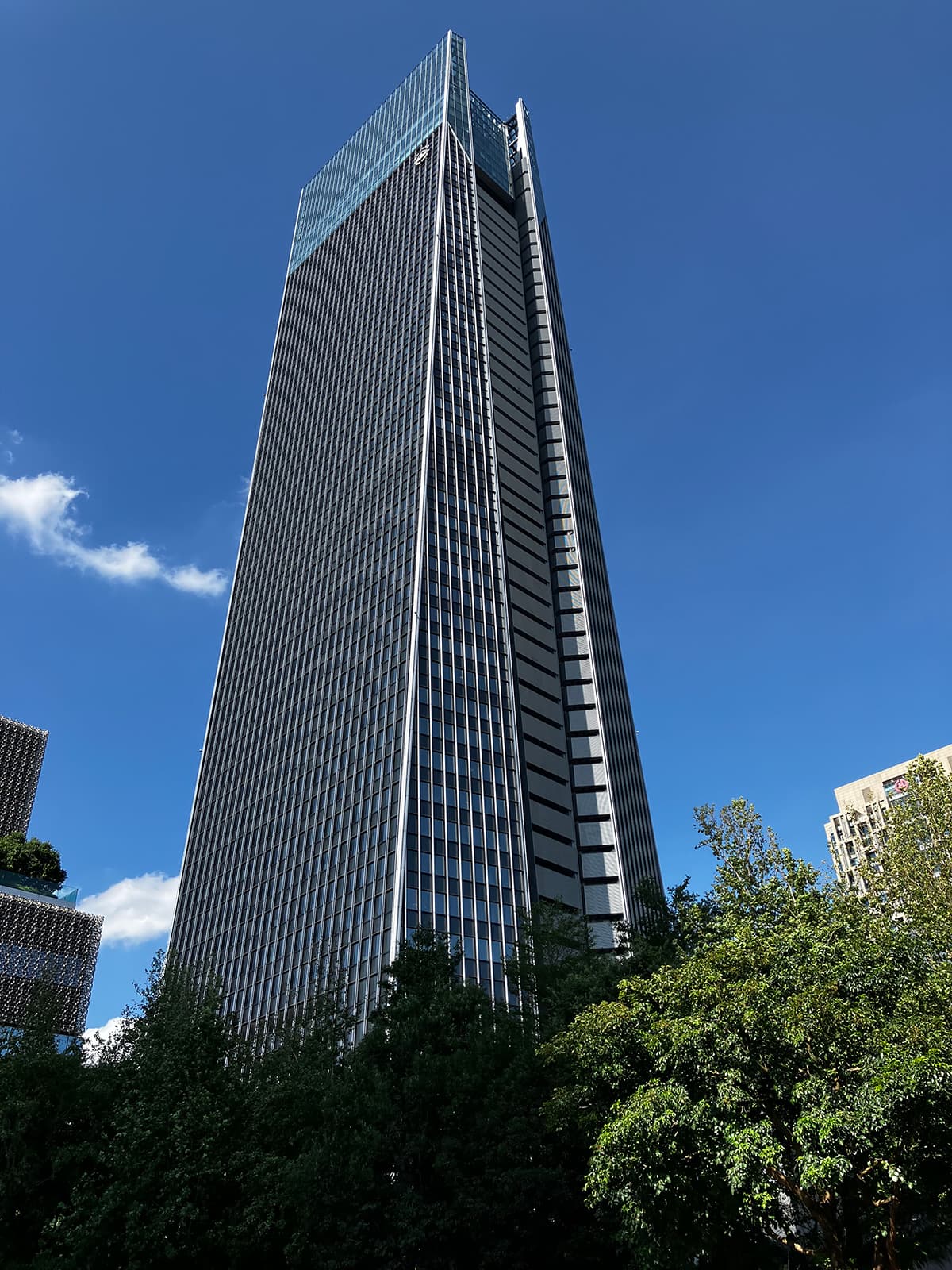
A 25-storey commercial building in Taipei's Xinyi District. The management committee had long used cradle access for facade cleaning. Because the building sits on a major arterial road, every programme required a highway occupation licence and traffic management, and the works routinely caused congestion and inconvenience to occupiers.
After review, the committee decided to try drone facade cleaning.
The constraints
- 85 metres tall, with roughly 6,000 ping of facade
- Busy surrounding roads that could not be closed for long
- Mixed curtain wall glazing and aluminium panel, needing zoned treatment
- A requirement that normal operation of the building continue throughout
The approach
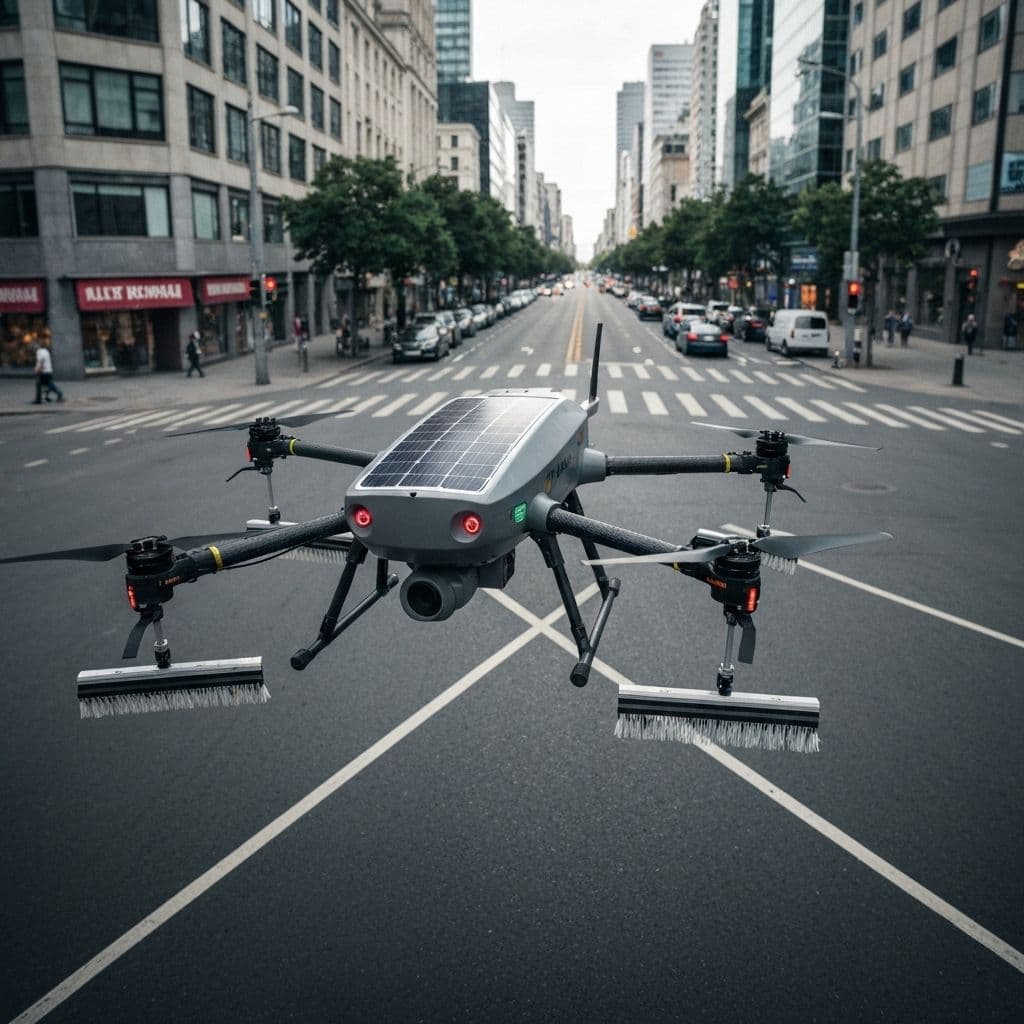
- Airborne working throughout — only a small ground control area was needed, so no road closure application was required
- Zoned and time-shifted — scheduled around the building's occupancy pattern, working outside peak hours
- Material-specific agents — separate environmentally sound formulations for the glazing and the aluminium panel
- Live quality monitoring — the result confirmed on camera as the work proceeded
Outcome
| Cradle access | Drone cleaning | |
|---|---|---|
| Days on site | approx. 14 | approx. 5 |
| Road closure | Required (approx. 3 days each time) | Not required |
| Crew | 8–10 | 3–4 |
| Effect on building operation | Moderate | Minimal |
| Total cost | approx. NT$320,000 | approx. NT$250,000 |
The committee's feedback afterwards was that drone cleaning saved roughly 22% on cost and, more importantly, sharply reduced the disruption to the building's day-to-day operation — enough that it has become their preferred method for scheduled cleaning.
4. Case study: a residential community in Songshan District
Background
A 15-storey residential development in Songshan, three blocks in total. The management committee faced three problems:
- Lanes too narrow for a crane to enter
- Residents at work during the day, wanting the work not to disrupt home life
- A limited budget, with cost needing to be controlled
Where drone cleaning helped
Working from the development's central courtyard, the team cleaned each block in turn. All three were completed in four days, at roughly 18% below the traditional quotation.
5. Cost benchmarks by district
Indicative facade cleaning costs across Taipei:
- Xinyi and Da'an Districts (predominantly commercial): NT$40–70 per ping
- Songshan and Zhongshan Districts (mixed use): NT$35–60 per ping
- Neihu and Nangang Districts (technology parks): NT$35–55 per ping
- Wanhua and Datong Districts (older neighbourhoods): NT$35–50 per ping
The actual figure depends on the building's condition and needs a site assessment. Compare quotations from several contractors.
6. Why drone cleaning is gaining ground in Taipei
Drawing the above together, drone facade cleaning has clear advantages in this city:
- No road closure — which addresses Taipei's single biggest constraint
- Faster on site — on the two projects above, roughly a third of the days a traditional method needed
- Not limited by space — narrow lanes and dense developments are workable
- Safer — no exposure to falls from height
- Less disruptive to residents — quieter, and over sooner
Closing: finding the right method for a Taipei building
Facade cleaning in Taipei involves more variables than in most places — regulation, traffic, environment and budget all bear on the decision, and a management committee has to weigh all of them. Drone facade cleaning is steadily becoming the mainstream choice for building maintenance in the city.
General Drone Service works extensively in Taipei, with project experience across Xinyi, Songshan and the city's other districts, providing professional, safe and efficient facade cleaning to management committees and property managers.
Next steps
- Browse our completed projects for more Taipei facade cleaning work
- See drone cleaning services for the full process
- Review how cost is assessed
- See facade cleaning across Taipei for district coverage
- Get in touch to book a facade asset assessment