Meeting ESG occupational safety targets through drone facade cleaning
In brief: Drone facade cleaning removes personnel from the high-risk environment, eliminating the fall exposure that dominates work-at-height incident statistics. That strengthens an organisation's position in ESG assessment. Global ESG investment passed US$35 trillion in 2024, and companies with strong ESG positions have tended to outperform on share price.
With ESG now central to how corporate sustainability is assessed, occupational safety has become one of the items large enterprises, multinationals and plant managers watch most closely.
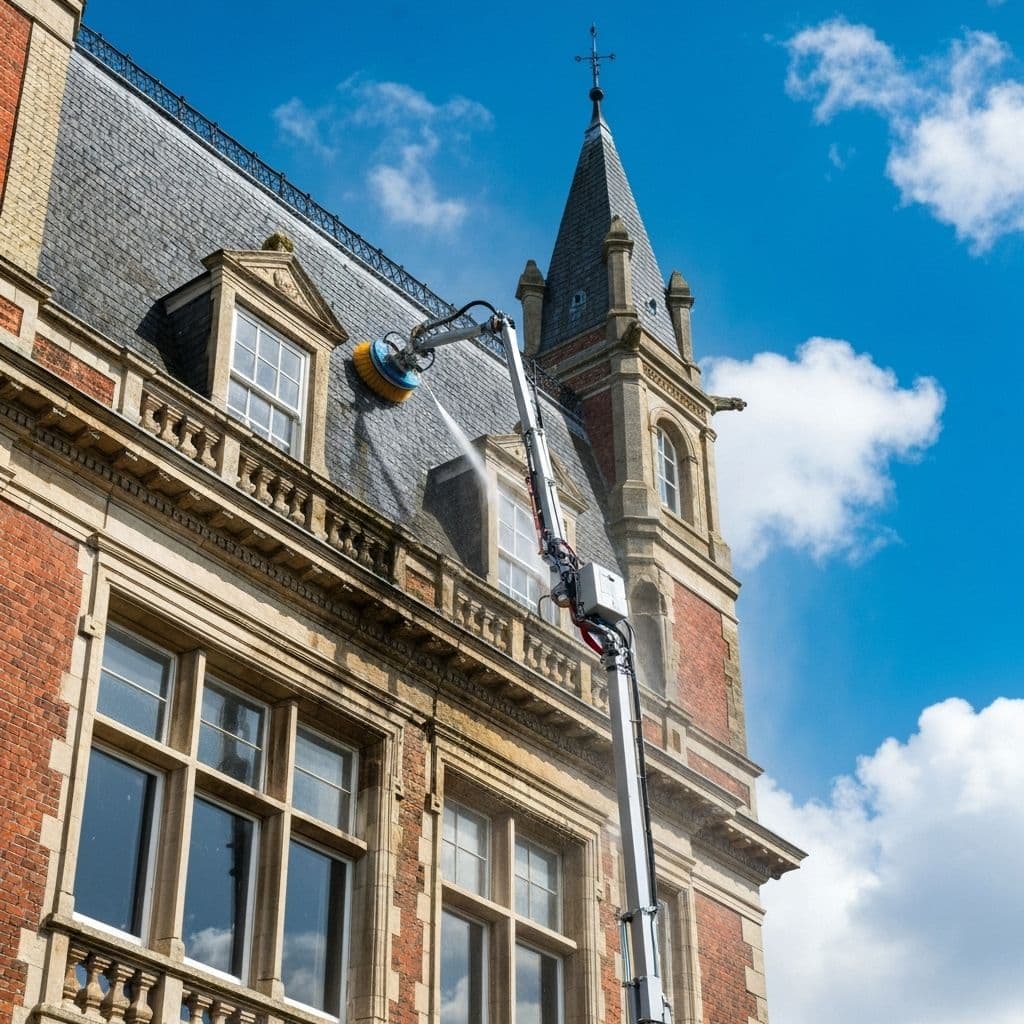
Ministry of Labor statistics make the point plainly: work at height is among the most dangerous work in building maintenance, and serious incidents occur every year. Traditional boom lift work carries real risk, and when something goes wrong the organisation faces not only legal liability but serious damage to its ESG position and its standing.
Drone facade cleaning offers a way to get the maintenance done while substantially reducing that occupational safety exposure.
What follows covers:
- What ESG occupational safety indicators actually require
- The risks and challenges in traditional work at height
- How drone cleaning reduces occupational safety exposure
- How organisations use it to strengthen their ESG position
- Worked cases and the benefits realised
🌍 1. ESG occupational safety indicators
What the S in ESG requires
The S in ESG covers an organisation's responsibilities to its employees, customers and society, and occupational safety and health is among the most significant items assessed.
The main indicators
- ✅ Occupational incident rate — frequency and severity
- ✅ Safety training hours — time employees spend in safety education
- ✅ Risk management framework — whether safe systems of work exist and are followed
- ✅ Emergency response capability — the process when something goes wrong
- ✅ Supply chain safety — the safety standards of contractors
Where traditional work at height creates ESG risk
Boom lift and rope access work presents several problems in ESG assessment:
1. High occupational incident exposure
- Fall risk
- Equipment failure risk
- Weather exposure
- Fatigue-induced error
2. Safety indicators that are hard to quantify
- Safe systems of work are difficult to apply consistently
- Risk assessment lacks precision
- Emergency response capability is limited
3. Supply chain management difficulty
- Contractor safety standards vary
- A single safety management standard is hard to impose
- Liability after an incident is complicated to allocate
These do more than depress an ESG score. They can lead to:
- Litigation and compensation liability
- Reputational damage
- Higher insurance premiums
- Reduced investor confidence
🚁 2. Drone facade cleaning as the alternative
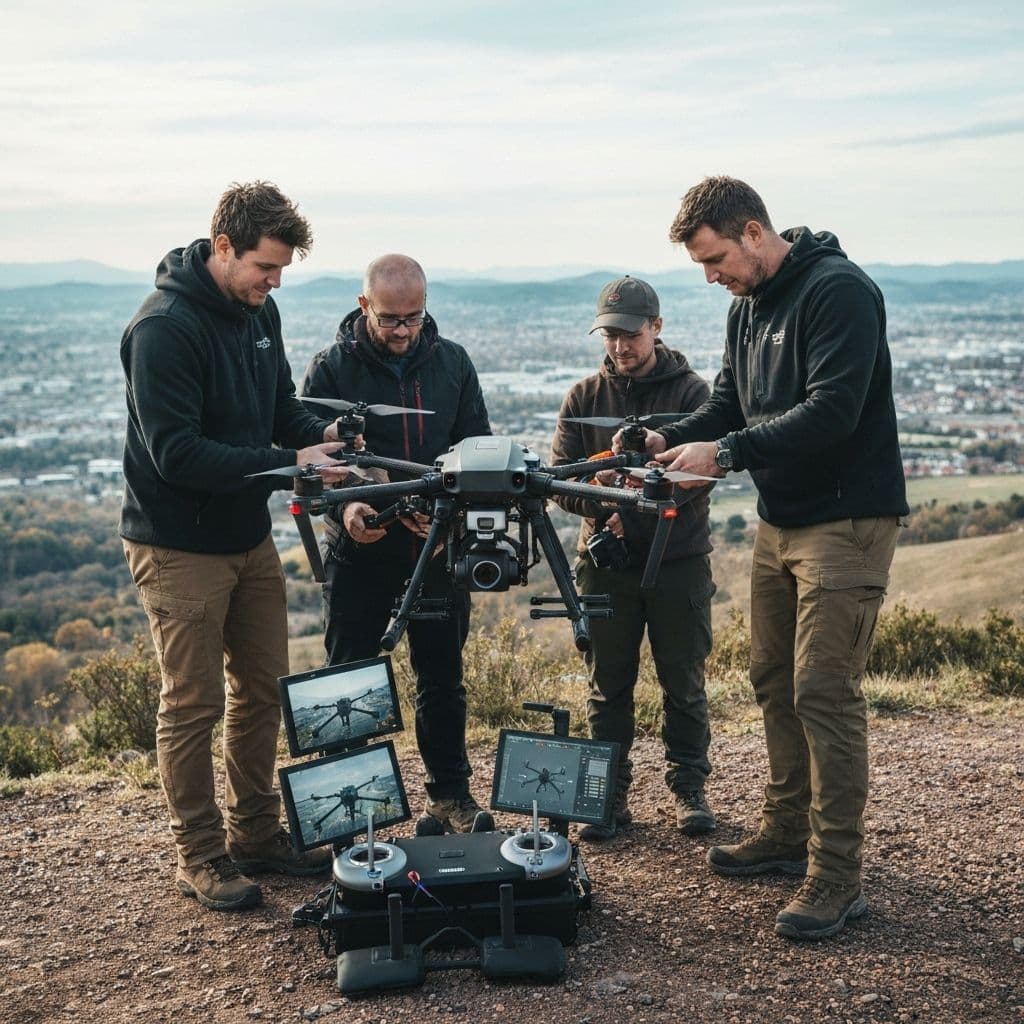
The central advantage of drone facade cleaning is that it removes personnel from the high-risk environment while achieving the same result.
How it reduces occupational safety risk
1. No work at height
- ✅ The operator controls the aircraft from the ground
- ✅ The aircraft does the work at height
- ✅ The fall exposure is eliminated
2. Precise risk control
- ✅ Flight paths planned in advance
- ✅ The operation monitored live
- ✅ Automatic obstacle avoidance
3. Standardised safety procedures
- ✅ A single operating standard
- ✅ Repeatable safety processes
- ✅ Complete operational records
4. Less scope for human error
- ✅ Fatigue is not a factor in the same way
- ✅ Lower risk of operational error
- ✅ More consistent delivery
The ESG value
Adopting drone facade cleaning strengthens an organisation's position in several respects:
✅ A lower occupational incident rate
- Incident rates for remotely operated work are far below those for traditional access
- The safety indicators are measurable and auditable
✅ Better safety training
- Operators complete professional drone training
- Safety awareness and technical skill improve together
✅ A complete risk management framework
- Standardised operating procedures
- Full risk assessment and contingency planning
✅ Stronger supply chain safety management
- Contractors selected on professional certification
- A single safety management standard applied
📊 3. What the improvement looks like
Traditional access against drone work
| Boom lift work | Drone facade cleaning | Change | |
|---|---|---|---|
| Occupational incident exposure | High — falls from height dominate the statistics | Very low — no personnel at height | ⬇️ Substantial |
| Safety training hours | 40–80 hours/year | 20–40 hours/year | ⬇️ 50% |
| Risk management framework | Hard to standardise | Highly standardised | ⬆️ Materially better |
| Emergency response | Constrained by site conditions | Fast and precise | ⬆️ Materially better |
| Completeness of records | Manual, with gaps | Digital, complete and auditable | ⬆️ Materially better |
What goes into the sustainability report
Once drone facade cleaning is adopted, an organisation can report:
1. Occupational safety performance
- No occupational incidents during drone operations
- Work-at-height exposure removed from the facade maintenance programme
- Safety training — operators holding professional drone safety qualifications
2. Technology adoption
- Innovation — current drone technology improving operational safety
- Digitalisation — the operational process digitalised, improving management
3. Supply chain responsibility
- Supplier management — contractors selected on professional certification
- Responsible procurement — preferring safe, low-impact service options
🏢 4. Worked cases
Case one: a technology park estate
Background:
- An estate management company responsible for several tall buildings
- Traditional boom lift work had produced safety incidents every year
- The occupational safety issues were depressing its ESG position
Approach:
- Drone facade cleaning adopted across the estate
- Standardised safe systems of work established
- Regular safety training and exercises
Outcome:
- ✅ No occupational incidents in the two years following adoption
- ✅ The occupational safety indicator improved materially in its ESG assessment
- ✅ Lower total cost — a slightly higher cost per operation, more than offset by reduced settlements and insurance premiums
- ✅ Better standing with investors and clients
Case two: a multinational's Taiwan headquarters
Background:
- A multinational's headquarters in Taiwan, with demanding ESG requirements
- Regular facade maintenance needed, but the traditional method carried too much risk
- Head office required a method meeting international safety standards
Approach:
- Drone facade cleaning adopted
- A contractor with international certification selected
- Complete operational records and reporting established
Outcome:
- ✅ International standards met by the working method
- ✅ Sustainability reporting strengthened by the technology adoption
- ✅ Supply chain management — a safe, reliable supplier framework established
- ✅ Investor recognition from ESG funds
💡 5. Choosing a contractor that meets ESG requirements
What to assess
1. Certification
- ✅ Drone operating licences held
- ✅ Occupational safety and health management system certification
- ✅ Appropriate insurance in place
2. Safety management
- ✅ Standardised operating procedures
- ✅ A complete risk assessment framework
- ✅ An emergency response plan
3. Records and reporting
- ✅ Detailed operational records
- ✅ Safety performance reporting
- ✅ Auditable operational data
4. ESG experience
- ✅ Previous work with large enterprises
- ✅ An understanding of what ESG assessment requires
- ✅ The ability to provide supporting documentation
Checklist
When selecting a drone cleaning contractor, confirm:
- Are the professional licences and certifications held?
- Is there a complete safety management system?
- Can detailed operational records be provided?
- Is there experience of large enterprise clients?
- Can the contractor support your ESG reporting?
- Is the insurance cover adequate?
- Is there emergency response capability?
📈 6. ESG investment and enterprise value
Where ESG investment stands
- Global ESG investment passed US$35 trillion in 2024
- Companies with strong ESG positions have tended to outperform on share price
- More investors treat ESG as a material factor in allocation decisions
How occupational safety bears on enterprise value
1. Lower operational risk
- Fewer incident settlements
- Lower insurance premiums
- Litigation costs avoided
2. Better corporate standing
- Demonstrating that employee safety is taken seriously
- Building a reputation for responsibility
- Attracting good people
3. Investor recognition
- A stronger ESG position
- Access to ESG-mandated capital
- Support for valuation
4. Regulatory compliance
- Meeting occupational safety and health regulation
- Meeting ESG reporting requirements
- Lower compliance risk
🎯 7. How to start
Step one: assess the current position
-
Review existing methods
- Identify the risk points in the traditional approach
- Assess the occupational incident rate
- Review the safety management framework
-
Set ESG targets
- Define what occupational safety improvement means
- Set measurable indicators
- Agree the timeline
Step two: choose the solution
-
Assess whether drone cleaning fits
- Confirm the building suits drone operations
- Assess technical feasibility
- Compare the economics
-
Select a contractor
- Assess technical capability
- Confirm the safety management system
- Compare proposals
Step three: implement and monitor
-
Establish the framework
- Define standard operating procedures
- Establish monitoring
- Set performance indicators
-
Improve continuously
- Review the process regularly
- Collect safety data
- Refine the framework
Step four: report
-
Record the data
- Document the operations in detail
- Collect safety performance data
- Build the operational file
-
Write the ESG report
- Present the occupational safety improvement
- Explain the technology adopted
- Show the commitment to continuing improvement
Frequently asked questions
Q1: Does drone facade cleaning eliminate occupational safety risk entirely, and how much does it move an ESG score?
A: It removes personnel from the high-risk environment, which is where the great majority of work-at-height risk sits. No method is entirely risk-free, but incident rates for remotely operated work are far below those for traditional access. Occupational safety is a significant indicator under the S in ESG, so reducing incident exposure improves the safety indicator and the overall ESG position with it. More detail: drone facade cleaning.
Q2: How does an organisation actually use drone cleaning to meet its ESG safety targets?
A: Four stages. Assess the current position — review existing methods and set ESG targets. Choose the solution — assess whether drone cleaning fits and select a contractor that meets your ESG requirements. Implement and monitor — establish the management framework and improve continuously. Report — record operational data and write it into the sustainability report.
Q3: Does drone cleaning cost more, and how do we know a contractor meets our ESG requirements?
A: The cost per operation may be slightly higher, but on total cost — including incident risk, insurance premiums and legal exposure — drone cleaning is usually lower. The improvement in ESG position is a further long-run benefit that is harder to quantify. Choose a contractor with proper certification, a complete safety management system and the ability to provide detailed operational records.
Q4: Does drone cleaning suit every kind of building?
A: It suits most — tall buildings, industrial plant, commercial towers. Some unusual structures or site constraints need assessing case by case, so a site survey before commissioning is worthwhile.
📌 Closing: in an ESG era, occupational safety is competitive advantage
With ESG now central to how corporate sustainability is assessed, occupational safety has stopped being a cost and become a source of competitive advantage.
Drone facade cleaning lets an organisation complete its building maintenance while substantially reducing occupational safety exposure. Adopting it means:
- ✅ Lower occupational incident exposure — personnel removed from the high-risk environment
- ✅ A stronger ESG position — through a better occupational safety indicator
- ✅ Lower operating cost — fewer settlements, lower premiums
- ✅ Better corporate standing — demonstrating that employee safety matters
- ✅ Investor recognition — including from ESG-mandated capital
Worth reconsidering
Lower incident exposure, a stronger ESG position, lower operating cost, better corporate standing — those four together are what make drone facade cleaning the sensible route to an organisation's ESG occupational safety targets.
🚀 Arrange an ESG occupational safety assessment
Want to understand how drone facade cleaning could support your ESG occupational safety targets?
What we provide
- An ESG assessment — analysing the ESG risk in your current method
- Professional drone cleaning — an approach built to meet ESG requirements
- Complete operational records — supporting your ESG reporting
- Ongoing support — establishing a long-term ESG management framework
📞 Phone: +886-2-7733-7678 📧 Email: contact@drone168.com 🏢 Coverage: Taiwan-wide service · Taipei office only
Get in touch to arrange an assessment.
General Drone Service Co., Ltd. — professional drone cleaning in Taiwan, helping organisations meet their ESG occupational safety targets
Last updated: 15 January 2025